What Is Umpire's Call in Cricket? DRS and LBW Explained

On this page7
Umpire’s Call is a DRS outcome for a marginal LBW review. When the ball-tracking result sits inside the protocol’s tolerance for pitching, impact or the wicket zone, the original on-field decision stays in force. An on-field out remains out and an on-field not out remains not out.
The phrase is easiest to understand alongside our LBW full-form and rule guide, what a Test match is and cricket umpire signals.
What does Umpire’s Call mean?
It means the technology has produced a marginal LBW result and the third umpire has not overturned the on-field decision.
DRS does not replace the on-field umpire with a simple “computer says yes” button. The protocol defines when the evidence is strong enough to reverse the decision and when the original call should stand. Umpire’s Call is the label for the latter LBW situation.
| On-field decision | Ball-tracking result | Final result |
|---|---|---|
| Out | Umpire’s Call | Out |
| Not out | Umpire’s Call | Not out |
| Out | Ball clearly missing the required LBW condition | Not out |
| Not out | Ball clearly satisfying the required LBW conditions | Out |
The final two rows are ordinary overturns. The first two are the marginal cases that produce the phrase.
When can it apply to an LBW review?
Umpire’s Call can apply when ball-tracking is marginal on pitching, impact or whether the projected path would hit the wicket.
An LBW decision still needs the underlying Law 36 conditions: the ball must be fair, the batter must not have hit it first, the interception must be in a permitted area and the projected path must meet the wicket requirement. DRS checks the disputed evidence; it does not remove the Law’s sequence.
Different competitions can set different distances, zones or protocols. Readers should therefore use the ICC appendix for an international match and the league’s own playing conditions for a domestic competition.
Does Umpire’s Call use up a review?
Under the current ICC international protocols cited here, an LBW Umpire’s Call does not count as an unsuccessful team review.
That rule prevents a side from being punished for asking the third umpire to inspect a genuinely marginal decision. A team still loses a review when the final result is an unsuccessful challenge under that competition’s review rules, so the exact allowance and retention procedure should be checked before a match.
The player’s request window also matters. ICC protocols commonly require the captain or dismissed batter to request a review promptly after the ball becomes dead; the time limit is not a license to wait for a replay.
Why does cricket keep Umpire’s Call?
Cricket keeps it to preserve the authority of the on-field decision in prediction-heavy, marginal situations.
Ball-tracking projects the path after the ball has hit the pad. Small differences in impact point, release, seam movement and model tolerance can change the projected path. The protocol treats the edge of the zone differently from a clear “hitting” or “missing” prediction.
The approach is a compromise: technology can correct obvious errors while the on-field umpire remains decisive when the evidence is too close to treat as certain.
Is Umpire’s Call the same as a third decision?
No. It is not a third outcome alongside out and not out; it is a reason the original out or not-out decision is retained.
Commentators may say “Umpire’s Call, stays with the umpire,” but the scorecard still records the final binary result. The review screen can show a marginal zone even though the match result simply says out or not out.
This distinction helps readers separate the review process from the Laws. The appeal, the on-field decision, the review request, the ball-tracking result and the final scorecard entry are different steps.
How should viewers read an LBW review?
Viewers should check the original decision first, then the three LBW questions and the DRS outcome.
- Was the delivery fair and did it hit the batter before the bat?
- Where did it pitch, and was that legal for the batter’s stance?
- Was impact in line or otherwise permitted under Law 36?
- Would the ball have hit the wicket?
- Did the technology show a clear result or Umpire’s Call?
The screen’s colour graphic is not a substitute for reading the playing conditions. Use the official protocol when a tournament’s process differs.
Frequently asked questions
What is Umpire’s Call?
A marginal LBW DRS result that leaves the original on-field decision in place.
Does it mean the umpire was definitely right?
No. It means the evidence did not meet the threshold to overturn the call.
Does it use a review?
Current ICC international protocols say an LBW Umpire’s Call does not use the review.
Can it happen on caught decisions?
The phrase is primarily for LBW ball-tracking outcomes, not ordinary catches.
Is it the same in every competition?
No. Playing conditions control the exact DRS process.
Why not let the technology decide every close call?
The protocol preserves the on-field decision when the projected result is too marginal to treat as certain.
Bottom line
Umpire’s Call means “the original decision stands” in a marginal LBW DRS review. It is not proof that a ball definitely would or would not have hit the stumps, and it is not a third scorecard result. Read the original decision, the LBW conditions and the competition’s current DRS protocol together.
Frequently asked questions
What is Umpire's Call in cricket?+
It is a DRS outcome in a marginal LBW review where the ball-tracking result stays with the on-field decision rather than overturning it.
Does Umpire's Call mean the umpire was correct?+
It means the technology did not meet the threshold to overturn the original decision. It is not a separate third result of out or not out.
Does Umpire's Call use up a review?+
Under current ICC international protocols, an LBW Umpire's Call does not use up the team's review. The competition's playing conditions control the exact procedure.
When can Umpire's Call happen?+
It can apply to marginal LBW pitching, impact or wicket-zone outcomes that fall within the protocol's defined tolerance.
Can Umpire's Call happen on a caught review?+
The phrase is primarily an LBW DRS outcome. Catches use separate replay and decision protocols rather than LBW ball-tracking zones.
Is Umpire's Call the same in every league?+
No. ICC internationals use ICC protocols, while leagues may publish their own playing conditions and review allowances.
Sources
Related rules & terms guides
View all →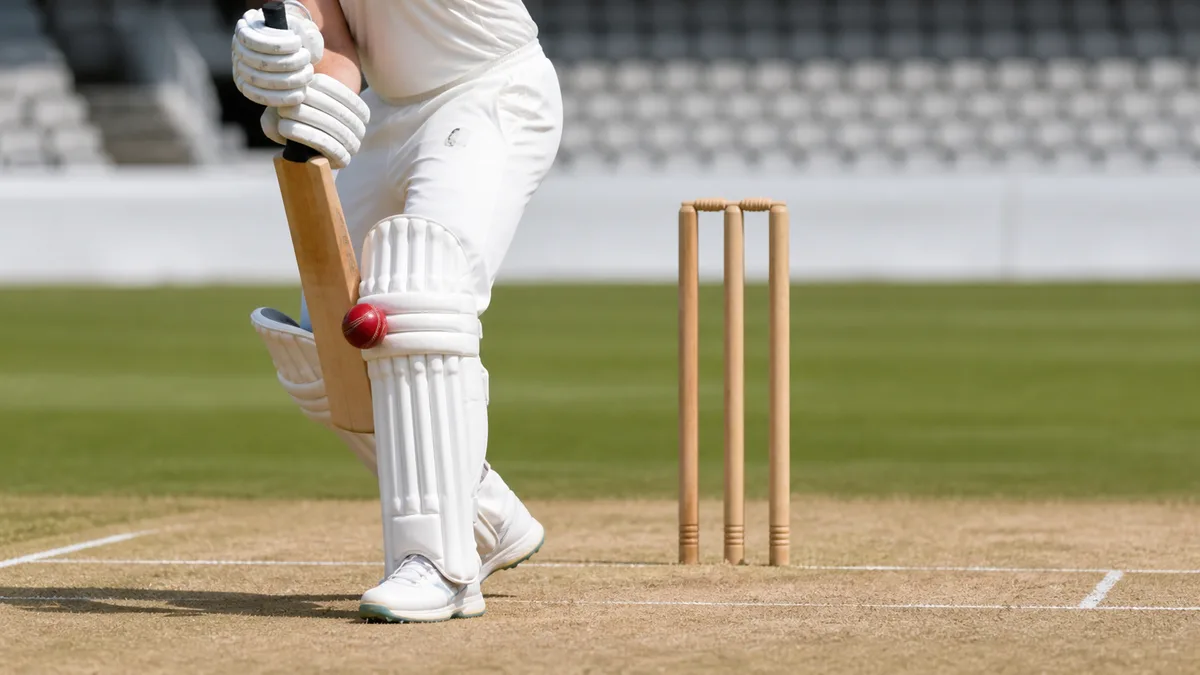
LBW Full Form in Cricket: Leg Before Wicket Explained
LBW stands for leg before wicket. Learn the five conditions in MCC Law 36, when a batter is not out, and how DRS and umpire's call work.

Cricket Umpire Signals: A Plain-English Guide to Every Call
Learn the cricket umpire signals for out, four, six, no-ball, wide, dead ball, review, drinks and the new ball, with text alternatives for every gesture.
How Many Ways Can You Be Out in Cricket? All 10
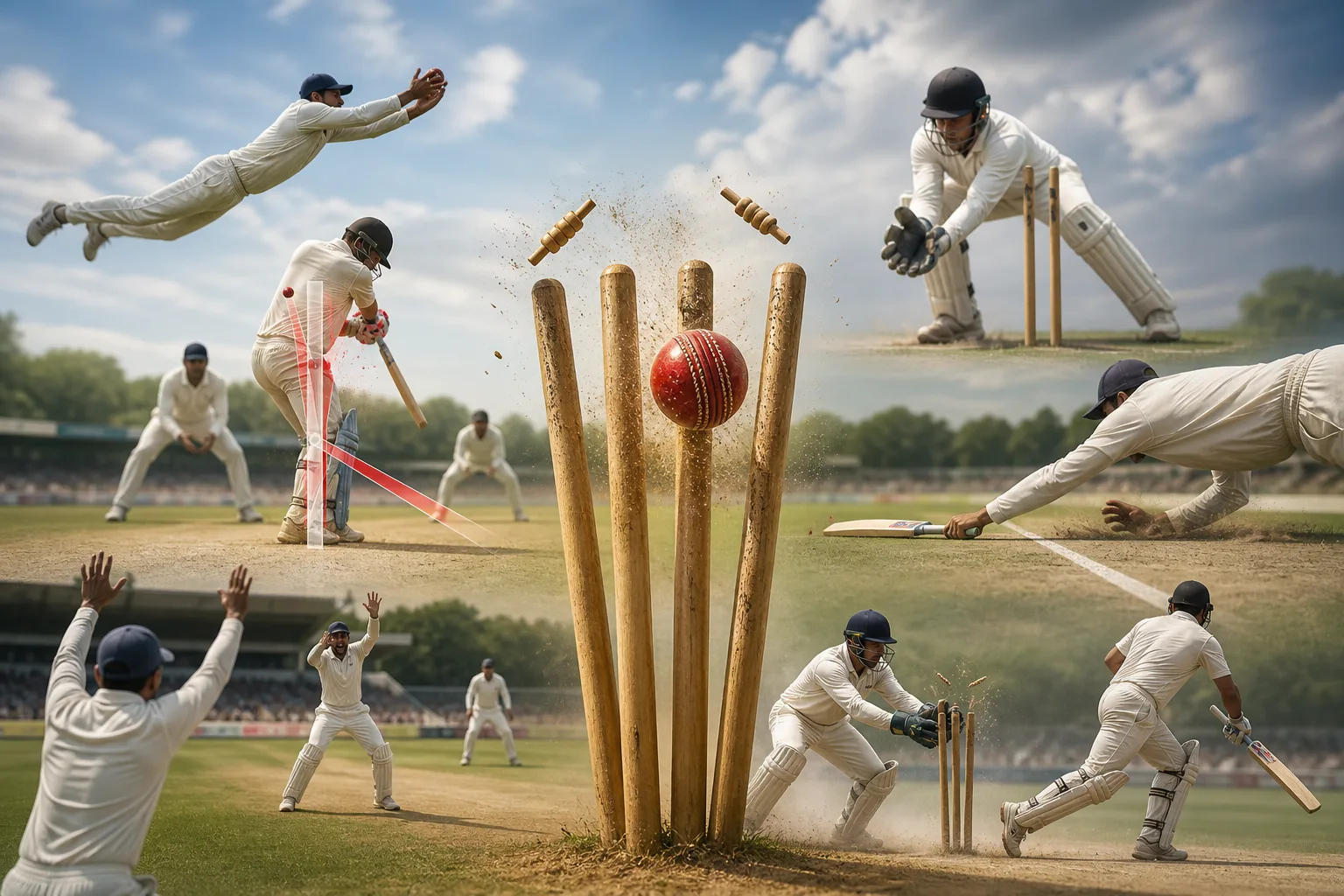
All 10 ways a batter can be out under the MCC Laws, with Law numbers, how often each happens, and which dismissals actually credit the bowler.
Cricket Umpire Rules: Duties, Signals, Reviews and Match Control
What cricket umpires must do before, during and after a match: appeals, signals, no-balls, reviews, safety, scoring and MCC Law responsibilities.
What Does the Fourth Umpire Do in Cricket?
The fourth umpire supports the on-field and TV officials with pitch access, equipment, balls, weather and match administration.
Types of Bowling in Cricket: Pace, Swing, Seam and Spin
A clear guide to the main types of bowling in cricket, including pace, swing, seam, off-spin, leg-spin and variations such as cutters and slower balls.