How Many Wickets Are There in Cricket? Team, Innings and Pitch Explained
On this page7
The answer depends on what “wicket” means. Cricket has two physical wickets on the pitch, one at each end. A normal 11-player batting side can lose 10 wickets before its innings ends because the last batter has no partner, while a Test side can lose up to 20 wickets across two innings.
For related basics, read cricket fielding positions, what an innings means and what a Test match is.
How many physical wickets are on a cricket pitch?
There are two physical wickets, one behind each batting crease at opposite ends of the 22-yard pitch.
Each wicket has three wooden stumps and two bails resting on top. The striker defends one wicket while the non-striker stands at the other end; after a completed run, the batters exchange ends and the striker faces from the opposite wicket.
The word “wicket” can therefore refer to the equipment itself. When commentary says “the wicket is broken,” it means the stumps or bails have been legally put down under the Laws.
How many wickets end one innings?
Ten wickets normally end a team innings when the side has 11 nominated players.
The reason is mathematical: two batters are required to continue an innings. After 10 dismissals, only one batter remains, so no partner is available. The innings can also end earlier if the captain declares, the over limit is reached in a limited-overs format or a match result has already been decided.
| Match format | Innings per side | Maximum wickets lost by one side | Other innings-ending condition |
|---|---|---|---|
| Test | 2 | 20 | All out, declaration, chase or result |
| ODI | 1 | 10 | 50-over limit or all out |
| T20 | 1 | 10 | 20-over limit or all out |
| Recreational match | Agreed | Depends on agreed team size | Local rules or overs |
The table gives the standard international model. Local cricket can use fewer players and a different agreed structure.
How many wickets can fall in a Test match?
A Test side can lose 20 wickets because it is allowed two innings.
That does not mean every Test uses all 20. A side may win by an innings, chase a target after losing fewer than 10 wickets, declare an innings or be prevented from completing its final innings by time. A draw can leave wickets unused on both sides.
The follow-on rule can make a side bat twice in succession, but it does not create extra wickets beyond its two innings. It changes the order of the innings.
What does “fall of wicket” mean?
“Fall of wicket” means a dismissal and the score at which it happened, not a new physical wicket being added to the pitch.
A scorecard may show 52/1, 104/2 and 210/3. The number after the slash is the wickets lost; the number before it is the team’s runs. A batter can be dismissed caught, bowled, LBW, run out, stumped or by another legal dismissal, but each dismissal counts as one wicket lost to the batting side.
The bowler does not receive credit for every wicket lost. Run out, retired out and obstructing the field are team dismissals that do not enter the bowler’s wicket tally.
Is a wicket the same as a dismissal?
In everyday commentary, wicket can mean a dismissal, but the terms are not identical in every scorecard context.
“The bowler took a wicket” usually means the bowler was credited with dismissing a batter. “The team lost a wicket” includes run outs and other dismissals that are not credited to the bowler. “The wicket is difficult” may refer to the pitch or playing surface instead.
This is why a reader should look at the surrounding words. The same noun can describe equipment, a dismissal, the pitch or the score-state.
What happens if a batter retires hurt or retired out?
Retiring hurt does not automatically count as a lost wicket, while retiring out is recorded as a wicket lost under the relevant Law and playing conditions.
A retired-hurt batter may return if able and permitted. A retired-out batter has ended that innings unless the opposition captain consents to a return under the Laws. Neither dismissal is automatically credited to the bowler, which is why a scorecard’s wickets lost and bowler wickets can differ.
The exact treatment can vary by competition conditions, so a tournament guide should be checked before applying recreational shorthand to an international scorecard.
Frequently asked questions
How many wickets are on the pitch?
Two: one at each end, each made from three stumps and two bails.
How many wickets end a normal innings?
Ten for an 11-player side, because the final batter has no partner.
How many wickets can fall in a Test?
Twenty for one side across its two innings, though a result can arrive earlier.
How many wickets in an ODI or T20?
Up to 10 in the one innings, unless the over limit ends it first.
Does a run out count as a wicket?
Yes for the team, but not as a wicket credited to the bowler.
Is a wicket always a dismissal?
No. It can also mean the stumps, the pitch or the score-state.
Bottom line
Cricket uses “wicket” in several related ways. There are two wickets on the pitch, 10 possible dismissals in a standard one-innings side and 20 possible wickets for a Test side across two innings. Knowing which meaning is intended makes scorecards, commentary and the Laws much easier to follow.
Frequently asked questions
How many wickets are on a cricket pitch?+
There are two wickets, one at each end of the pitch. Each wicket has three stumps and two bails.
How many wickets end a cricket innings?+
In a normal 11-player side, 10 wickets end the innings because the final batter has no partner to face the next delivery.
How many wickets can fall in a Test match?+
A team has two innings, so it can lose up to 20 wickets in a Test. A match may end earlier through a chase, declaration, follow-on or result.
How many wickets are in an ODI or T20 innings?+
A team can lose up to 10 wickets in its one innings, although the innings may also end when the over limit is reached.
What is a wicket in the scorecard?+
Wicket can mean the physical stumps, a batter's dismissal, or the fall of a wicket recorded in the score. The context determines the meaning.
Does a retired hurt batter count as a wicket?+
Not automatically. A retired hurt batter may return under the Laws, while a retired-out batter is recorded as a wicket lost even though no bowler receives credit.
Sources
Related rules & terms guides
View all →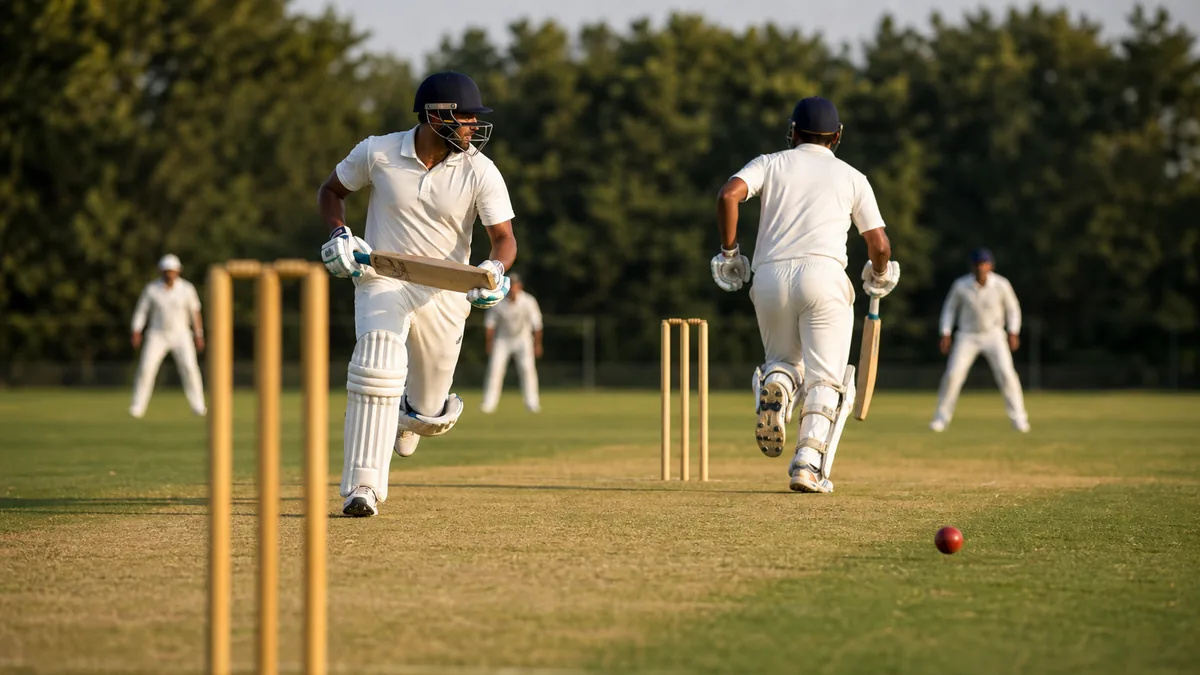
What Is an Innings in Cricket? Meaning and Rules
An innings is one team's turn to bat, or one batter's time at the crease. Learn how innings work in Tests, ODIs and T20s and the five ways they end.

Cricket Fielding Positions Explained: A Simple Field Setup Guide
Learn every main cricket fielding position, where it sits relative to the batter and when captains use slips, point, cover, midwicket and the boundary riders.

Cricket Field Dimensions: Pitch, Crease and Boundary Measurements
A cricket pitch is 22 yards long and 10 feet wide, but the boundary is not one fixed circle. See the official dimensions and what changes by venue and format.
How Many Players in a Cricket Team? 11 on the Field
A cricket team has 11 players on the field. Here is the full squad, the 12th man, what substitutes may do, concussion subs and the IPL Impact Player rule.
Types of Bowling in Cricket: Pace, Swing, Seam and Spin
A clear guide to the main types of bowling in cricket, including pace, swing, seam, off-spin, leg-spin and variations such as cutters and slower balls.
Cricket Umpire Signals: A Plain-English Guide to Every Call
Learn the cricket umpire signals for out, four, six, no-ball, wide, dead ball, review, drinks and the new ball, with text alternatives for every gesture.