Cricket Fielding Positions Explained: A Simple Field Setup Guide

On this page7
Cricket fielding positions are named around the batter, not around a fixed compass point. For a right-handed batter, the off side is generally in front of the body and the leg side is behind the legs; the sides reverse for a left-hander. The standard setup combines close catchers, ring fielders and boundary riders, then shifts them to match the bowler and the batter. Captains also use the standard cricket umpire signals and limited-overs fielding restrictions to communicate and legalise the setup.
This guide gives the fielding vocabulary first. For related basics, see what a Test match is, types of bowling in cricket, the innovative shots in cricket, cow corner in cricket, the wicketkeeper record page for most stumpings in cricket history and the enclosed-format box cricket rules.
What are the main cricket fielding positions?
The main positions form a ring around the wicketkeeper and the two ends of the pitch.
| Position | Usual area | Main job |
|---|---|---|
| Wicketkeeper | Behind the striker’s stumps | Takes edges, stops byes and gathers every delivery |
| Slip | Behind the batter on the off side | Catches edges from seam and swing bowling |
| Gully | Wider than slip, behind square | Covers thick edges and cut shots |
| Point | Square on the off side | Stops cuts and attacks hit square of the wicket |
| Cover | In front of square on the off side | Saves drives through cover |
| Mid-off | In front of the batter, off side | Stops straight drives and supports the bowler |
| Mid-on | In front of the batter, leg side | Stops straight drives and clips toward mid-on |
| Midwicket | Square to slightly in front on leg side | Covers pulls, flicks and clips |
| Square leg | Square on the leg side | Protects the sweep and horizontal-bat shots |
| Fine leg | Behind square on the leg side | Stops glances, leg-side edges and deflections |
The positions are zones rather than painted spots. A captain may move a “deep point” or “short midwicket” several metres depending on the batter and the score.
How do off side and leg side work?
The off and leg sides are defined from the striker’s orientation, so they change when a left-hander faces the bowler.
For a right-hander, cover, point, mid-off, slips and gully are on the off side. Mid-on, midwicket, square leg and fine leg are on the leg side. The wicketkeeper remains behind the stumps, while the bowler delivers from the opposite end.
The terminology is useful because a captain can call a plan such as “protect the leg side” without naming every fielder. Coaches still need to show the player the actual angle because the same label can be short, deep, square or fine.
Which positions are used for fast bowlers?
Fast-bowling fields usually prioritise edges on the off side and catches behind the bat.
A Test captain may use two or three slips, a gully, point, cover, mid-off, mid-on, square leg and fine leg. The exact combination depends on swing, seam, the new ball, the batter’s technique and the need to stop singles.
Shorter formats reduce the spare catching positions when boundary protection is more valuable. A deep third, deep point or deep square leg can replace an attacking close catcher after the batter begins clearing the infield.
Which positions are used for spin bowlers?
Spin fields usually protect the sweep, slog-sweep, single into the leg side and catches around the bat.
Close positions such as silly point, short leg and slip can be used when the ball is turning or bouncing. Square leg, midwicket and long-on become important because batters often use their feet or play across the line.
The field is also shaped by the spinner’s angle. A finger spinner turning away from a right-hander may invite an outside edge, while a leg-spinner may place a slip, deep midwicket and long-on for different dismissal and boundary options.
What are deep, short and boundary positions?
Words such as “deep,” “short,” “long” and “fine” describe distance or angle added to a basic position.
- Deep point: farther toward the boundary than point.
- Deep square leg: boundary protection behind square on the leg side.
- Third man: behind square on the off side, often near the boundary.
- Long-off and long-on: boundary positions straight in front of the batter.
- Deep midwicket: boundary protection between square leg and long-on.
- Short leg or silly point: very close catchers who need a helmet and quick reactions.
The laws and playing conditions also affect how many fielders can stand outside the inner circle in limited-overs cricket. The ICC playing-conditions pages should be checked for the competition rather than copied from a different format.
How should a captain set a field?
A captain should begin with the bowler’s plan and the batter’s most likely scoring shots, then place protection where the match situation demands it.
- Choose the intended line and length.
- Place the wicketkeeper and any close catching positions.
- Cover the batter’s strongest boundary areas.
- Keep enough ring fielders to prevent easy singles.
- Check format restrictions and communicate the plan to the bowler.
This sequence explains why there is no single “correct” cricket field. A defensive field with seven boundary riders may be sensible late in a limited-overs chase, while an attacking Test field can keep three slips and a short leg even when a run is available.
Frequently asked questions
What are the main fielding positions?
Wicketkeeper, slips, gully, point, cover, mid-off, mid-on, midwicket, square leg and fine leg are the basic positions.
What is off side?
For a right-hander, it is the side in front of the body and open bat; it reverses for a left-hander.
What does a slip do?
A slip catches edges behind the batter on the off side.
What is midwicket?
Midwicket covers the leg-side space between square leg and mid-on.
Can fielders move during an over?
Yes, captains may adjust them between deliveries within the Laws and format restrictions.
Why do fields differ in T20s and Tests?
Limited-overs restrictions and boundary pressure reward different placements from a longer Test innings.
Bottom line
Cricket fielding positions are a shared language for angles, distances and jobs. Start with the wicketkeeper, slips, gully, point, cover, mid-off, mid-on, midwicket, square leg and fine leg, then adapt the field to the bowler, batter, format and score. A useful fielding diagram should label the batter’s viewpoint and state when the setup is attacking or defensive.
Frequently asked questions
What are the main fielding positions in cricket?+
The main positions are wicketkeeper, slips, gully, point, cover, mid-off, mid-on, midwicket, square leg and fine leg, with third man and boundary riders used as conditions require.
What is the off side in cricket?+
For a right-handed batter, the off side is the side in front of the batter's body and the bat's open face; for a left-hander, the sides reverse.
Where does a slip fielder stand?+
A slip stands behind the batter on the off side, at an angle to the wicketkeeper, ready for an edge from a seam or swing delivery.
What does a midwicket fielder stop?+
Midwicket covers the leg-side angle between square leg and mid-on, often intercepting pulls, flicks and clips.
Can a captain move fielders anywhere?+
Captains can move fielders within the Laws and competition playing conditions, but powerplay and format restrictions limit some placements.
Why do fielding positions change during an over?+
The captain reacts to the batter's scoring areas, bowler's line, pitch movement, match situation and the number of fielders allowed outside the circle.
Sources
Related rules & terms guides
View all →
What Is Cow Corner in Cricket? Field Position and Meaning
Cow corner is the informal cricket field area between deep midwicket and long-on. Learn the meaning, location and shots played there.
How Many Wickets Are There in Cricket? Team, Innings and Pitch Explained
Cricket has two physical wickets, 10 dismissals to end a normal innings and 11 players in a side. Here is how each meaning fits together.
Fielding Restrictions in Cricket: ODI and T20 Powerplays Explained
Current men's ODI and T20I powerplays limit how many fielders can stand outside the 30-yard circle. See the phases, penalties and shortened-innings caveats.
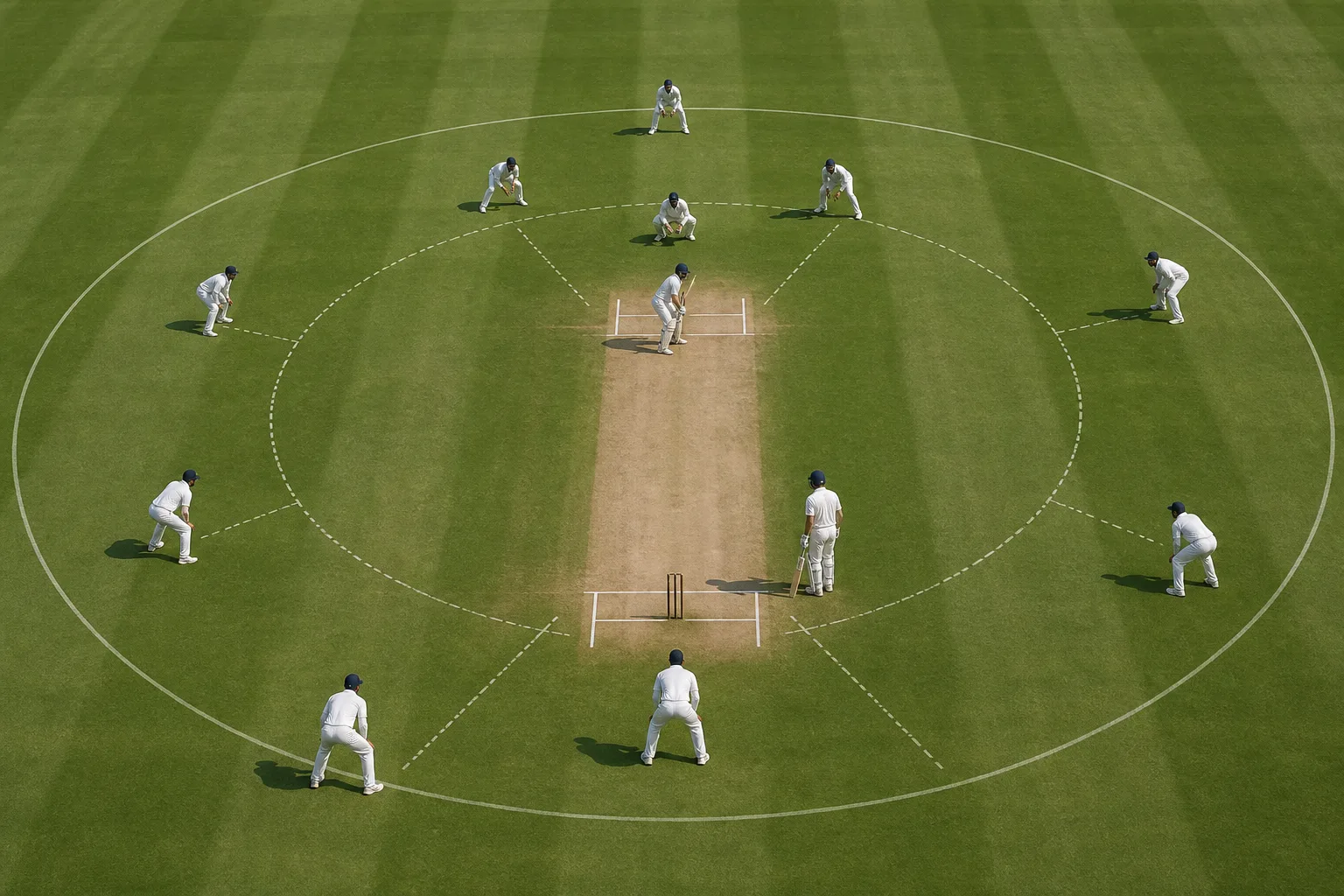
How Many Players in a Cricket Team? 11 on the Field
A cricket team has 11 players on the field. Here is the full squad, the 12th man, what substitutes may do, concussion subs and the IPL Impact Player rule.

Cricket Field Dimensions: Pitch, Crease and Boundary Measurements
A cricket pitch is 22 yards long and 10 feet wide, but the boundary is not one fixed circle. See the official dimensions and what changes by venue and format.
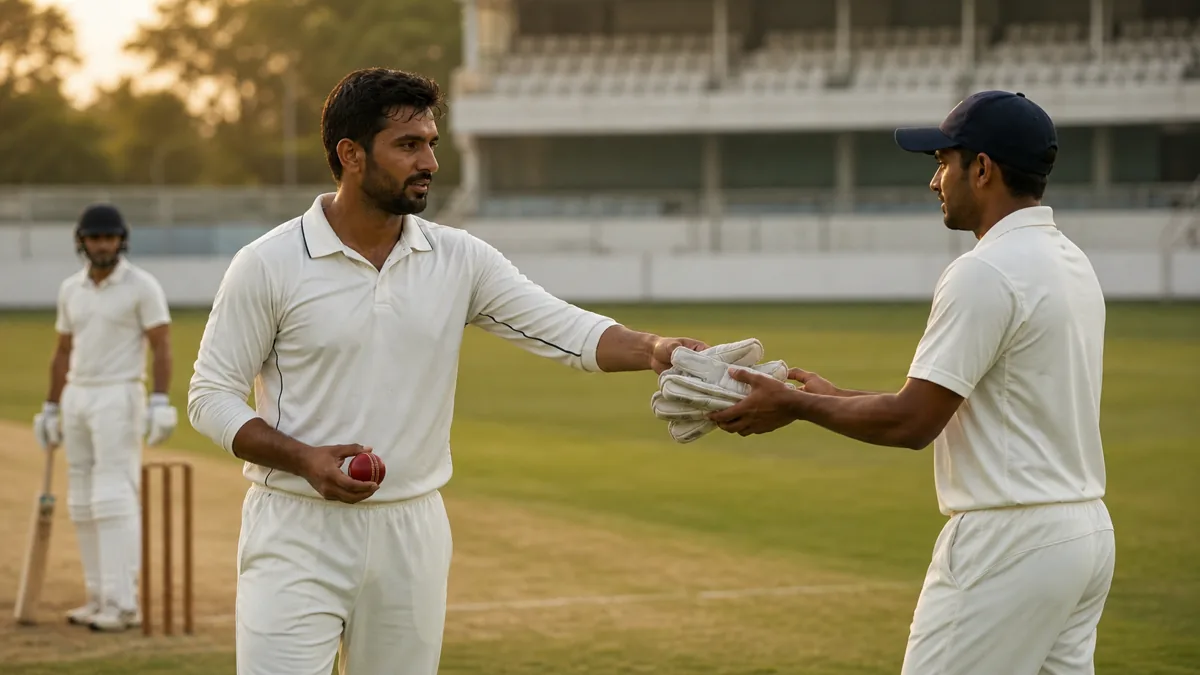
Can a Wicketkeeper Bowl in Cricket? The Rule Explained
Yes, a wicketkeeper can bowl in cricket. See how teams switch keepers, when substitutes cannot bowl, and what happens to the gloves and pads.