Innovative Shots in Cricket: Scoop, Switch Hit and More
On this page10
- 01What makes a cricket shot innovative?
- 02How the main innovative cricket shots differ
- 03Reverse sweep and switch hit are not the same
- 04The scoop family: paddle, ramp, Dilscoop and reverse scoop
- 05Upper cut and helicopter shot solve different pace problems
- 06Inside-out drives, slog sweeps and 360-degree batting
- 07Are innovative cricket shots legal?
- 08Who invented these cricket shots?
- 09How to practise innovative shots safely
- 10Why T20 cricket made innovative shots more common
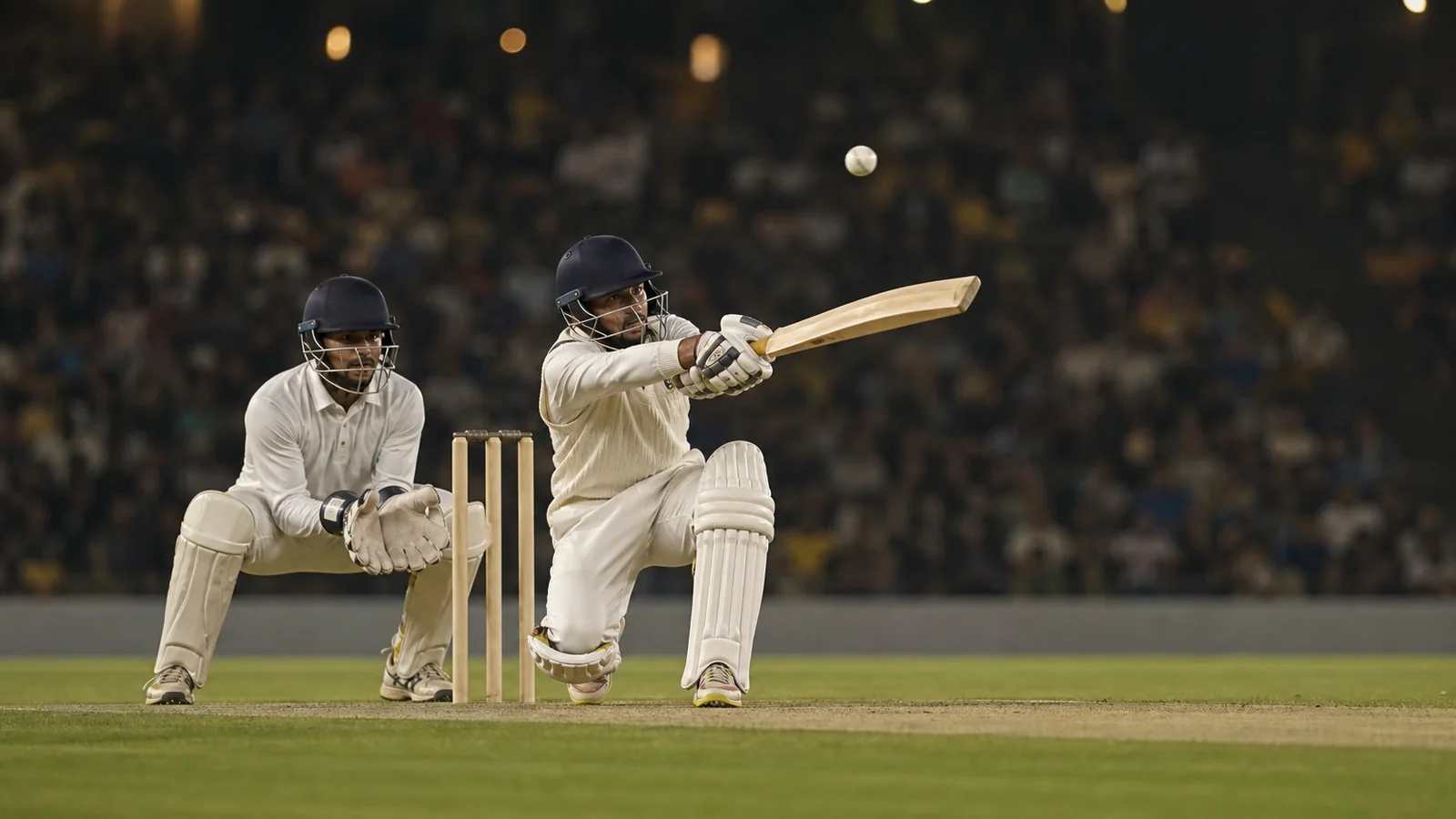
Innovative shots in cricket are strokes adapted to score in areas that a conventional stance does not easily reach. The reverse sweep attacks the original off side, a switch hit changes the batter’s handed stance, scoops use the bowler’s pace behind the wicket, and the helicopter shot turns a full ball into a leg-side scoring chance. Control starts with equipment that fits: use the cricket bat size guide and cricket bat weight guide before copying a high-speed shot.
These names are often mixed together. A Dilscoop is a type of scoop, but not every ramp is a Dilscoop. A reverse sweep is not automatically a switch hit. The useful distinction is not how spectacular the shot looks. It is what the batter changes, which delivery the shot answers and where the ball is meant to go.
What makes a cricket shot innovative?
An innovative shot changes one or more parts of a familiar stroke: stance, grip, bat face, body position, contact point or intended scoring area. The change normally solves a tactical problem.
A spinner may protect the conventional leg-side sweep, so the batter reverses the bat face and attacks backward point. A fast bowler may land a yorker with fine leg inside the circle, so the batter uses the pace to ramp the ball behind the wicket. If a captain loads one side of the field, changing stance can expose the other.
Innovation does not mean improvising blindly. The best versions are repeatable shots chosen for a specific line, length and field. That separates a practised scoop from a lucky edge and an intentional leg-side whip from the accidental inside edge sometimes called a French cut.
How the main innovative cricket shots differ
This table treats the shots as tactical options rather than ranking one above another. The ideal delivery is only a guide. Pace, bounce, field placement and the batter’s position can change the choice.
| Shot | Main movement | Best suited to | Intended scoring area | Main failure risk |
|---|---|---|---|---|
| Reverse sweep | Reverses bat face and swing, usually without a full stance change | Full spin bowling | Original off side, from point to third man | Top edge, bowled or LBW |
| Switch hit | Changes into the opposite-handed stance and grip | Spin or predictable full bowling | Weak side of a loaded field | Mistimed aerial shot, bowled or LBW |
| Paddle sweep | Kneels and guides rather than swings hard | Full spin bowling | Fine leg, often inside the boundary rider | Glove, leading edge or missed straight ball |
| Marillier ramp | Gets under a full pace ball and redirects it fine | Full ball or yorker from a quick bowler | Over or past short fine leg | Bowled, hit wicket or catch behind square |
| Dilscoop | Crouches under the ball with the bat face lifting it straight back | Full or good-length pace bowling | Directly over the wicketkeeper | Missed ball, glove or impact to the batter |
| Reverse scoop | Changes the bat angle to ramp toward the off side | Full pace bowling | Over the keeper toward third man | Edge to keeper or short third |
| Upper cut | Uses bounce and pace with an open, horizontal bat | Short ball outside off stump | Over slips toward third man | Caught behind or at deep third |
| Helicopter shot | Strong bottom-hand whip with a circular follow-through | Yorker, low full toss or full ball | Midwicket to long-on | Bowled, mistimed leg-side catch or loss of shape |
The table also explains why one ball does not suit every innovation. The red, white and pink ball guide covers the equipment used across formats, while line and length decide which stroke is available on a particular delivery.
Reverse sweep and switch hit are not the same
Both shots send the ball toward the side opposite a batter’s usual hitting arc, but the mechanics are different.
Reverse sweep
A right-handed batter playing a conventional sweep swings toward square leg. For a reverse sweep, the batter reverses the bat face and sweeps toward the original off side, usually around point or third man. The feet may move and the hands may adjust, but the batter does not need to become a full left-hander.
The shot is most useful against spin when the off-side field is open. It can disturb a bowler’s line and make a captain move a fielder away from the protected leg side. The risk is that a cross-batted swing leaves little room for a late correction if the ball is straighter, quicker or shorter than expected.
Switch hit
The switch hit goes further. A right-handed batter changes into a left-handed stance, or a left-hander into a right-handed one, during the bowler’s approach. The hands normally change on the handle as the feet and shoulders reverse.
Kevin Pietersen became the shot’s defining modern exponent. An ICC Hall of Fame feature links his version to the squash movements he learnt when young, while the ICC Cricket Committee has described the switch hit as a legitimate part of the game. David Warner and Glenn Maxwell later made it a regular white-ball option.
The switch creates more possible strokes than a reverse sweep, but it also adds moving parts. A batter must complete the stance change, watch the ball and rebuild balance before contact. If any part runs late, the stumps, pads and close catchers return to the game.
The scoop family: paddle, ramp, Dilscoop and reverse scoop
“Scoop,” “ramp” and “lap” are sometimes used as if they name one precise technique. In practice, they form a family of strokes that borrow pace and send the ball behind the wicket. The contact point and target separate the main versions.
Paddle sweep
The paddle sweep is a controlled guide, usually played from one knee against a spinner. The bat meets the ball with less force than a slog sweep and directs it toward fine leg. It works when the boundary fielder is square or fine leg is inside the circle.
The batter still has to cover the straight ball. Reaching too far across can bring LBW, bowled and a glove to the wicketkeeper into play. A paddle is therefore a placement shot, not a low-risk escape from every full delivery.
Marillier ramp
Douglas Marillier became closely associated with a scoop against fast bowling in the early 2000s. Rather than trying to drive a yorker back past the bowler, he got under the ball and redirected it over or past fine leg.
Wisden records two innings that fixed the association. Against Australia in 2001, he scooped Glenn McGrath twice during a chase that Zimbabwe lost by one run. Against India in Faridabad in 2002, he made 56 from 24 balls and repeatedly used the stroke during a successful chase.
Those innings justify calling him a major populariser. They do not prove that no cricketer had attempted a similar movement earlier.
Dilscoop
The Dilscoop is aimed straighter than the Marillier version. Tillakaratne Dilshan shuffled across, crouched low and presented the bat beneath the ball so it travelled directly over the wicketkeeper.
Dilshan brought it to a global audience at the 2009 World Twenty20. The ICC named him player of the tournament after 317 runs, and specifically noted his ability to flip pace bowling over the keeper. The shot became inseparable from his name because he used it repeatedly against high-level attacks, not because every earlier scoop disappeared from cricket history.
Reverse scoop
A reverse scoop takes the same behind-the-wicket idea toward the off side. The batter changes the face and angle of the bat so a full ball travels over the wicketkeeper or toward short third rather than fine leg.
The exact movement varies by player. Some begin from a reverse-sweep position, while others open the face late. That flexibility is why “reverse scoop” describes the target and bat angle more reliably than one mandatory foot pattern.
Upper cut and helicopter shot solve different pace problems
The upper cut and helicopter shot are often grouped together because both are linked with famous batters. Tactically, they sit at opposite ends of the length spectrum.
Upper cut
An upper cut answers bounce. The batter uses an open, mostly horizontal bat to lift a short ball outside off over the slips or toward third man. Cricket Australia’s shot guide associates the stroke with Sachin Tendulkar and David Warner, while Virender Sehwag also made it a familiar scoring option.
It is not the same as a hard slash over point. The upper cut uses the delivery’s pace and sends it behind square. Because the bat is close to the line of the wicketkeeper and slips, poor contact can become a catch rather than a boundary.
Helicopter shot
The helicopter shot answers fullness. The batter gets the bat under a yorker, low full toss or other full delivery and uses a strong bottom hand to whip through the ball. The bat’s circular finish gives the shot its name, but the scoring force comes from contact, wrists and forearms rather than the flourish alone.
MS Dhoni made this a signature stroke, particularly when fast bowlers targeted the blockhole late in an innings. Calling him its defining populariser is sound. Naming an uncontested inventor is harder because wristy full-ball shots existed before the label became famous.
The shot usually targets midwicket or long-on. Missing the contact point exposes the stumps, and a slightly early or late swing can find a leg-side boundary fielder.
Inside-out drives, slog sweeps and 360-degree batting
Some modern-looking strokes are variations of established shots rather than separate inventions.
An inside-out lofted drive begins when a batter moves toward the leg side to create room, then hits a full ball over extra cover. The movement changes access to the field, but the bat path remains recognisably a lofted drive.
A slog sweep uses a larger, more aerial swing than a conventional sweep and normally attacks midwicket or square leg. It is a named shot, not proof that the player is a slogger in the broader cricket sense. A skilled batter can choose one controlled slog sweep without relying on uncontrolled hitting.
“360-degree batting” is best understood as a range rather than one stroke. It describes a batter able to combine orthodox shots, scoops, sweeps, ramps and changes of stance to access most of the field. It should not be listed as though every player uses one identical 360 shot.
Are innovative cricket shots legal?
Yes. Cricket does not reserve runs for textbook strokes. A reverse sweep, switch hit, scoop, upper cut or helicopter shot is legal when the delivery and stroke comply with the ordinary Laws.
Three details matter most:
- A switch hit remains legitimate. The ICC Cricket Committee considered the balance between bat and ball and did not ban the stroke.
- Movement affects wide-ball judgment. MCC Law 22 considers where the striker is standing, where the striker has stood after the ball came into play, and whether the ball would pass wide of a normal batting position. Moving across the crease does not guarantee a wide if the batter misses.
- Changing stance does not erase LBW. MCC Law 36 fixes the off side from the striker’s batting position when the ball comes into play. The ball must still pass the full five-condition LBW test.
The batter can also be out hit wicket if the bat or body breaks the wicket while preparing to receive or receiving the delivery. That risk is especially relevant to deep crease movements and large swings. It sits alongside bowled, caught and LBW in the complete guide to cricket dismissals.
Fielders cannot freely run to the other side during the bowler’s approach to cancel a switch hit. MCC restricts significant fielder movement before the ball reaches the striker, subject to the movements the Law permits in response to the stroke.
Who invented these cricket shots?
For most shots, “invented” promises more than the surviving evidence can support. Cricket was played for generations before every match was filmed, indexed and named consistently. Similar movements can also emerge independently in club, street and professional cricket.
It is safer to separate three ideas:
- earliest documented example: the oldest execution that a reliable record currently shows;
- modern populariser: the player who made the shot widely recognised and repeatable at elite level;
- namesake or signature player: the person whose name or public identity became attached to it.
Dilshan is the namesake and defining populariser of the Dilscoop. Marillier is closely tied to the fine-leg ramp against pace. Pietersen is the best-known modern reference for the switch hit, and Dhoni for the helicopter shot. None of those associations requires pretending that an undocumented batter never tried a similar movement first.
How to practise innovative shots safely
The conventional stroke beneath an innovation should come first. A reverse sweep grows from the sweep, an upper cut from the cut, and a ramp depends on watching a full ball closely enough to control the bat face.
A sensible practice sequence is:
- Choose one shot and define the delivery and field gap it is meant to answer.
- Rehearse the movement without a ball until the stance and balance are repeatable.
- Begin with gentle underarm feeds or controlled throwdowns.
- Add pace only after the contact point is consistent.
- Use normal protective equipment and a qualified coach, especially for shots that send a hard ball near the head.
- Practise leaving unsuitable deliveries rather than forcing the shot every time.
A batter who cannot reject the wrong ball has learnt a movement, not reliable shot selection. In a match, the best innovation is often the one that makes the bowler alter the field even when the batter does not use it again.
Why T20 cricket made innovative shots more common
T20 did not create every unconventional shot, but it changed the reward. Each innings has only 120 legal balls, boundary fielders are limited during the Powerplay, and bowlers increasingly use yorkers, slower balls and wide lines to defend small targets. Batters need ways to score from deliveries that once produced a safe dot ball.
That pressure made scoops and changes of stance easier to justify. A failed attempt may cost a wicket, but several unused scoring zones can cost the innings. The 2009 World Twenty20 gave the Dilscoop its largest early stage, while the T20 World Cup winners history shows how quickly the format became part of the international calendar.
ODI cricket offers more time but uses similar fielding restrictions and death-over bowling. The 50-over innings and Powerplay guide explains why modern one-day batters also need scoring options behind square, not only classical drives in front of the wicket.
For readers following the format’s record side, SportsMuntra also tracks most runs in ODI cricket, the fastest balls in IPL history and the fastest centuries in cricket. For a records-focused companion, see the fastest fifties in T20I cricket, while tournament background is in our Under-19 World Cup history and Women’s World Cup history guides.
Frequently asked questions
What are innovative shots in cricket?+
Innovative shots are batting strokes adapted to reach unusual scoring areas or counter a particular delivery and field. Examples include the reverse sweep, switch hit, ramp, Dilscoop, reverse scoop, upper cut and helicopter shot.
What is the difference between a reverse sweep and a switch hit?+
A reverse sweep reverses the bat face and swing while the batter usually keeps the original stance and grip. A switch hit involves changing into the opposite-handed stance, normally with the hands also changing on the handle, before playing the ball.
What is the difference between a Dilscoop and a ramp shot?+
Dilscoop is the name associated with Tillakaratne Dilshan's crouched scoop directly over the wicketkeeper. Ramp is the broader family of shots that redirects a pace delivery behind the wicket, including versions aimed toward fine leg or third man.
Is the switch hit legal in cricket?+
Yes. The ICC Cricket Committee has supported the switch hit as a legitimate stroke. The normal Laws still apply, including the rules for wides, LBW, hit wicket and unfair field movement.
Who invented the helicopter shot?+
There is no dependable basis for naming one uncontested inventor. The shot is most closely associated with MS Dhoni, who made the bottom-hand whip and circular follow-through a repeatable scoring option against full and yorker-length bowling.
Which innovative cricket shot is easiest to learn?+
There is no universal easiest shot, but a controlled paddle sweep is usually a safer starting point than a Dilscoop or switch hit. A player should first learn the conventional sweep, cut and full-ball contact with a qualified coach.
Sources
- ICC: Results of the Cricket Committee meeting on the switch hit
- ICC: The iconic shots that made Kevin Pietersen
- ICC: Dilshan named 2009 World Twenty20 player of the tournament
- MCC, Law 22: Wide ball
- MCC, Law 35: Hit wicket
- MCC, Law 36: Leg before wicket
- Cricket Australia: Twenty20 trick shots playbook
- Wisden: When Tillakaratne Dilshan unveiled the Dilscoop
- Wisden: Douglas Marillier's scoop against India
Related rules & terms guides
View all →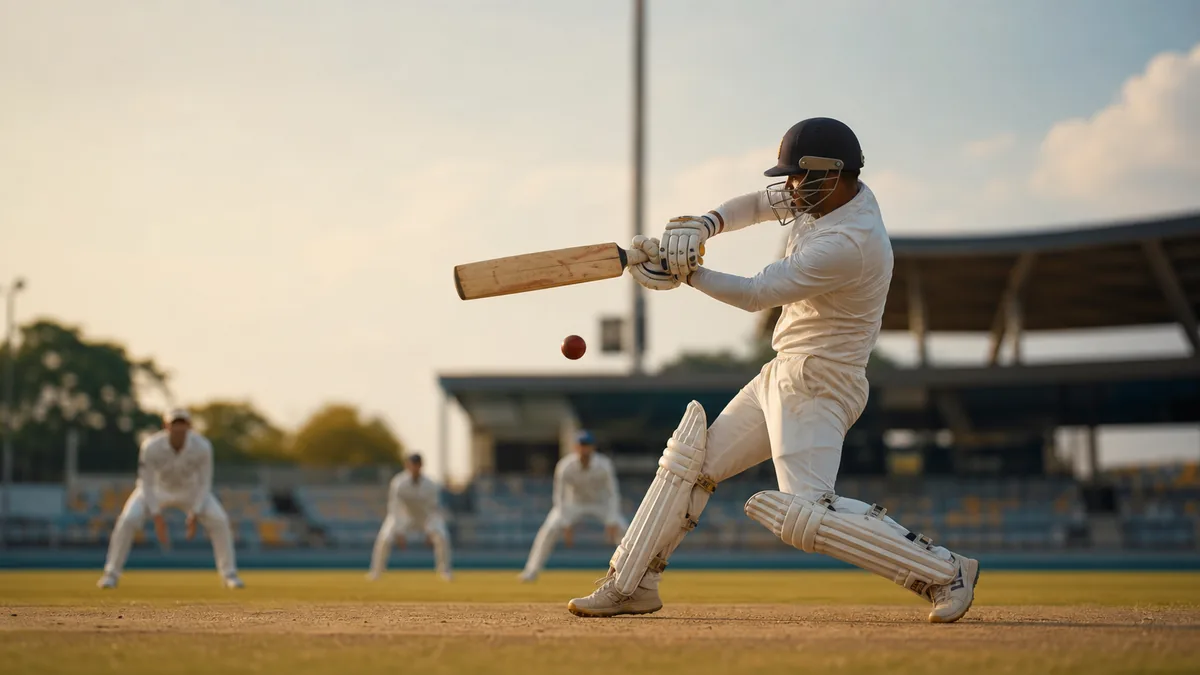
Slogger Meaning in Cricket: More Than a Big Hitter
A slogger hits hard to score quickly, often with limited control. Learn how sloggers differ from power hitters, finishers and technically attacking batters.
Cricket Hit the Ball Twice Rules: When Is the Batter Out?
Under MCC Law 34, a batter is out Hit the Ball Twice if, while the ball is in play, the striker wilfully strikes it a second time with the bat or with the body before a fielder touches it, except when the second action is solely to protect the wicket.

Cricket Cover Drive Basics: balance, head position and timing
A sound cover drive starts with balance and head position, then uses a controlled stride and a full face of the bat to send the ball through the off-side gap.
Cricket Bowled Rules: When Is the Wicket Put Down?
MCC Law 32 makes a batter out Bowled when a delivery breaks the striker's wicket, even if it first touches the bat or body, provided the delivery is not a No ball and the relevant exceptions do not apply.
Cricket Caught Rules: When Does a Catch Dismiss a Batter?
Under MCC Law 33, a catch is completed when a fielder controls the ball and it has not touched the ground, subject to the Law's conditions about boundary contact and a fielder's position.

Cricket Covering the Pitch Rules: What Covers Protect
MCC Law 10 governs covering the pitch and explains how the pitch and other parts of the playing area may be protected before and during play under the competition arrangements.