Cricket Bat Size Guide: Junior Sizes, Adult Length and Law Limits
On this page5
The right cricket bat size is the longest bat the player can control without losing balance or swing speed. Junior sizes 1–6, Harrow, adult short-handle and long-blade formats cover different reaches. The Laws of Cricket set maximum dimensions, but legality does not guarantee a good fit. For the next decision, compare cricket bat weight and innovative cricket shots, then build the movement and catching basics in our cricket fielding skills guide.
How do cricket bat sizes work?
Bat sizes run from junior size 1 through size 6, then Harrow and adult formats. The labels are a starting point; two bats with the same label can still feel different because of handle length, shoulder shape and pickup.
| Size | Typical player profile | Fit check |
|---|---|---|
| 1–3 | Young juniors | Player can address the ball without reaching |
| 4–6 | Older juniors | Comfortable stance and controlled swing |
| Harrow | Intermediate youth | Can lift and manoeuvre an adult-style blade |
| Short handle | Most adult players | Toes and hands stay balanced at address |
| Long blade | Taller or specialist adult use | Extra reach does not overwhelm control |
What are the legal bat dimensions?
The ICC playing conditions based on Law 5 cap the overall bat length at 38 inches and the blade width at 4.25 inches. The Laws also restrict edge thickness, overall depth and protective coverings.
Those are maximums, not recommended dimensions for every batter. A child using a legal adult bat can still struggle because the bat is too long or heavy to control.
How should a junior choose a bat?
Start with the player’s height and standing reach, then test the bat in a normal stance. The toe should not force the player to crouch unnaturally, and the player should be able to lift the bat into a backlift without leaning or losing balance.
Ask a coach to watch a few swings. A slightly lighter bat that is controlled cleanly is more useful than a larger bat that produces slow, mistimed contact.
Do short-handle and long-blade bats differ?
They differ in blade length, handle proportions and feel. Short-handle bats suit many adults, while long-blade options can help a taller player but may change pickup and balance.
How do size and weight interact?
Size and weight are separate choices. A correctly sized bat can still be too heavy, so test both control and pickup before buying. See the cricket bat weight guide for practical ranges and selection checks.
Frequently asked questions
Is size 6 an adult bat?
No. Size 6 is a junior size; Harrow and adult formats come after the junior range.
Can two size 5 bats feel different?
Yes. Willow profile, handle, edges and weight distribution change pickup.
What is the adult bat length?
The legal maximum overall length is 38 inches, but adult bats are sold in different formats and profiles.
Should a child use a heavy bat for power?
No. Control, timing and safe technique come first.
Does the law specify a minimum bat size?
The Laws set maximum dimensions; selection charts and coaching decide the practical fit.
Should I buy by age or height?
Use height and control as the starting point, then confirm with a coach.
The best cricket bat size is a control decision. Use the chart to narrow the options, then let stance, pickup and swing quality decide.
Frequently asked questions
What cricket bat size should I use?+
Start with a height-based size chart, then confirm that the player can lift, pick up and control the bat comfortably.
What is the largest legal cricket bat?+
The Laws of Cricket cap the overall length at 38 inches and the blade width at 4.25 inches, with additional depth and edge limits.
What is a Harrow cricket bat?+
Harrow is an intermediate size between many junior bats and a full adult short-handle bat.
Is bat size based only on age?+
No. Height, reach, strength, stance and control are more useful than age alone.
What is the difference between short handle and long blade?+
Both are adult bat formats, but a long blade provides extra blade length and can alter reach, balance and pickup.
Can a junior use an adult bat?+
Only when the player can control it safely and comfortably; a heavier or longer bat can slow the swing and create technical problems.
Sources
Related rules & terms guides
View all →
Cricket Bat Weight Guide: How Heavy Should Your Bat Be?
Learn cricket bat weight ranges, pounds-to-grams conversion, pickup and how to choose a bat that matches your strength, height and batting style.
Slogger Meaning in Cricket: More Than a Big Hitter
A slogger hits hard to score quickly, often with limited control. Learn how sloggers differ from power hitters, finishers and technically attacking batters.
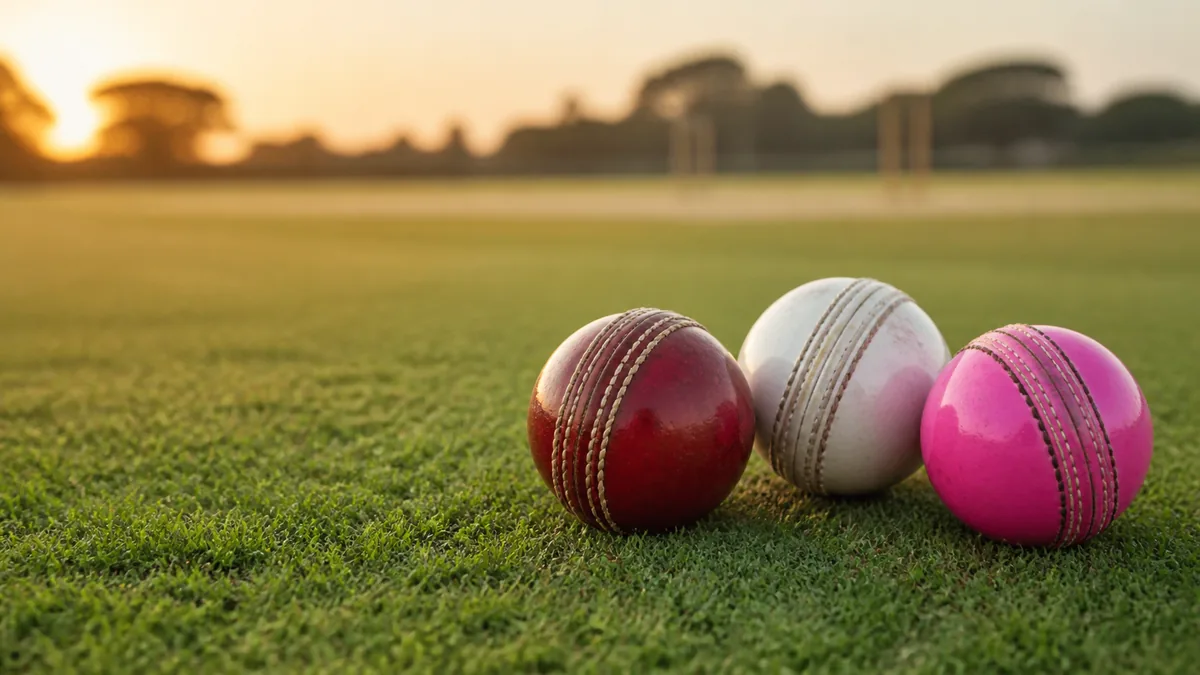
Types of Balls in Cricket: Red, White and Pink Explained
Cricket uses red, white and pink leather match balls. Compare their formats, visibility and wear, plus training balls, official sizes and major brands.
Types of Bowling in Cricket: Pace, Swing, Seam and Spin
A clear guide to the main types of bowling in cricket, including pace, swing, seam, off-spin, leg-spin and variations such as cutters and slower balls.
How Many Wickets Are There in Cricket? Team, Innings and Pitch Explained
Cricket has two physical wickets, 10 dismissals to end a normal innings and 11 players in a side. Here is how each meaning fits together.
Cricket Umpire Signals: A Plain-English Guide to Every Call
Learn the cricket umpire signals for out, four, six, no-ball, wide, dead ball, review, drinks and the new ball, with text alternatives for every gesture.