Cricket Bat Weight Guide: How Heavy Should Your Bat Be?
On this page5
The right cricket bat weight is the heaviest bat you can control through a full range of shots without slowing the swing or losing balance. Many adult bats sit around 2 lb 7 oz to 2 lb 12 oz, roughly 1.10–1.25 kg, but pickup matters as much as the number on the scale. Start with the cricket bat size guide, then test the bat in your stance. Technique context is covered in innovative cricket shots and what a Test match is.
What is a normal cricket bat weight?
Many adult bats are sold in the 2 lb 7 oz to 2 lb 12 oz range, with junior bats lighter. The range is a practical market guide, not an ideal that every player must use.
| Advertised weight | Approx. grams | Typical use |
|---|---|---|
| 2 lb 4 oz | 1,021 g | Light adult or stronger junior preference |
| 2 lb 7 oz | 1,106 g | Lighter adult bat |
| 2 lb 8 oz | 1,134 g | Common mid-range reference |
| 2 lb 10 oz | 1,191 g | Heavier adult bat |
| 2 lb 12 oz | 1,247 g | Heavy adult preference |
Why is pickup different from scale weight?
Pickup describes how the bat feels when lifted. A bat with more mass low in the blade can feel heavier than its listed weight, while a balanced profile can feel easier to move.
Handle stiffness, blade shape, toe profile and grip also change the sensation. That is why a shop test is more useful than ordering only from a number.
How should a batter choose weight?
Choose a bat that can be lifted into the backlift, held at address and accelerated through a range of shots. A player who mistimes pulls or cannot stop the bat safely is probably using too much weight.
Power hitters may prefer more mass, while a player relying on quick hands may value a lighter pickup. Neither is universally correct.
Do size and weight need to match?
Yes. A taller player may need a longer blade, but length can add leverage and swing demand. Junior players should not jump to an adult bat simply because it has a larger sweet spot.
Does cricket law limit bat weight?
The Laws of Cricket focus on dimensions, edges, depth and coverings rather than setting one universal bat weight. Competition organisers can add equipment requirements, so check the relevant playing conditions.
Frequently asked questions
Is 2 lb 8 oz too heavy for a beginner?
Not necessarily, but the player must control it comfortably and safely.
Should women use lighter bats?
There is no rule requiring that. The right weight depends on the individual player’s strength, size and technique.
Is a light bat better for timing?
It can help bat speed, but a player still needs enough mass for stable contact.
How often should I weigh a bat?
Check the actual bat if weight matters; stickers and moisture can change the number over time.
Does willow grade change weight?
Profile and grain do more to change weight and pickup than a marketing grade alone.
What if my bat feels heavier than advertised?
Test the scale, remove temporary stickers or grips, and ask the retailer about tolerances.
Bat weight is a feel-and-control decision. Use the gram range as a starting point, then choose the bat that lets you repeat the shot safely.
Frequently asked questions
What is a good cricket bat weight?+
Many adult bats fall around 2 lb 7 oz to 2 lb 12 oz, but the correct choice depends on control, strength, size and pickup.
How much is 2 lb 8 oz in grams?+
Two pounds eight ounces is approximately 1,134 grams.
Is a heavier bat better?+
Not automatically. A heavier bat can add mass but may slow the swing and reduce control.
What does pickup mean?+
Pickup is how heavy and balanced the bat feels while it is lifted and moved, which can differ from the scale weight.
Should junior bats be lighter?+
They should be light enough for the player to control safely; junior size and weight need to be assessed together.
How do I test a bat's weight?+
Lift it in your stance, make several controlled backlifts and play shadow shots without straining or losing balance.
Sources
Related rules & terms guides
View all →
Cricket Bat Size Guide: Junior Sizes, Adult Length and Law Limits
Use a cricket bat size chart by player height, then check pickup and the Laws of Cricket. Learn the difference between junior sizing, adult short-handle bats and legal dimensions.
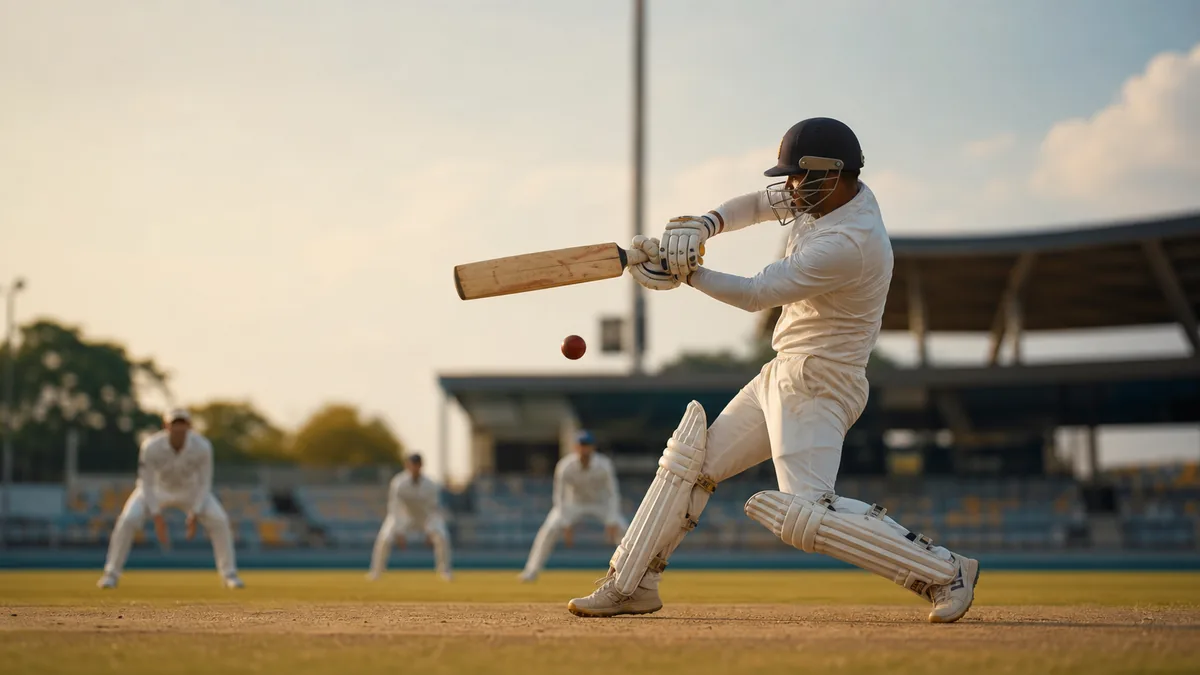
Slogger Meaning in Cricket: More Than a Big Hitter
A slogger hits hard to score quickly, often with limited control. Learn how sloggers differ from power hitters, finishers and technically attacking batters.
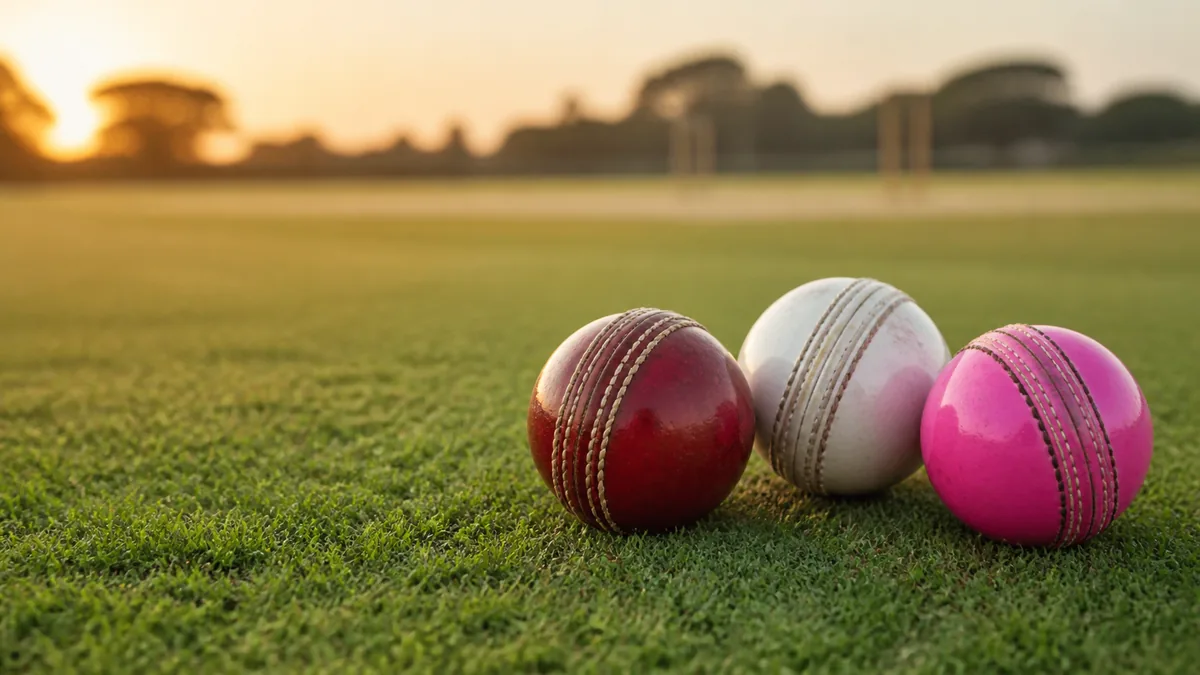
Types of Balls in Cricket: Red, White and Pink Explained
Cricket uses red, white and pink leather match balls. Compare their formats, visibility and wear, plus training balls, official sizes and major brands.
Types of Bowling in Cricket: Pace, Swing, Seam and Spin
A clear guide to the main types of bowling in cricket, including pace, swing, seam, off-spin, leg-spin and variations such as cutters and slower balls.
How Many Wickets Are There in Cricket? Team, Innings and Pitch Explained
Cricket has two physical wickets, 10 dismissals to end a normal innings and 11 players in a side. Here is how each meaning fits together.
Cricket Umpire Signals: A Plain-English Guide to Every Call
Learn the cricket umpire signals for out, four, six, no-ball, wide, dead ball, review, drinks and the new ball, with text alternatives for every gesture.