Types of Balls in Cricket: Red, White and Pink Explained
On this page9
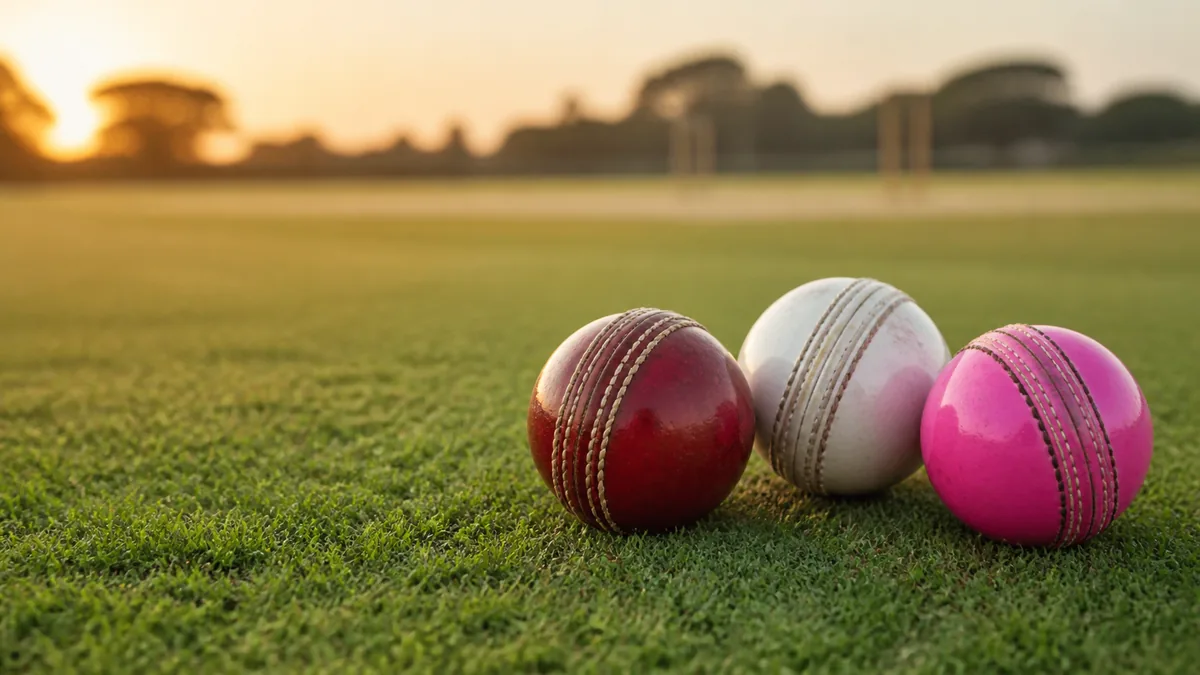
Professional cricket uses three main ball colours: red, white and pink. Red is standard for daytime Tests and first-class matches, white for limited-overs cricket, and pink for day-night Tests. All three are hard leather match balls; “leather ball” is therefore not a separate fourth colour type.
What are the main types of cricket ball?
The answer depends on what is being classified. For professional matches, colour and format create three useful categories. For practice and informal games, material creates another set.
| Ball | Main use | Clothing and light | Key purpose |
|---|---|---|---|
| Red leather | Daytime Tests and first-class cricket | White clothing, daylight | Traditional long-format visibility |
| White leather | ODIs, T20s and other limited-overs matches | Coloured clothing, often floodlights | Contrast in night and televised cricket |
| Pink leather | Day-night Tests and some first-class matches | White clothing, daylight into floodlights | Visibility through changing light |
| Tennis or taped tennis | Informal games and some practice | Any | Softer, cheaper recreation |
| Rubber or synthetic | Training, schools and indoor practice | Any | Durability and lower cost |
| Specialist training ball | Coaching drills | Any | Develop swing, reaction or batting technique |
This article uses “type” for the equipment. Yorker, bouncer, slower ball and googly are types of bowling deliveries, not different physical balls.
Red cricket ball
The red ball is the traditional choice for multi-day cricket played in daylight. Its dark colour contrasts with white clothing and remains visible against a light sight screen.
A Test fielding side normally begins an innings with one red ball. Under the Laws, it may request a new one after 80 overs, although it can continue with the old ball. The long period of use allows the surface and seam to change, bringing conventional swing, seam movement, spin and possible reverse swing into different stages of the innings.
Red leather is commonly darkened and then lacquered. BBC Sport’s examination of production found that its treatment can leave a different feel from the shinier white version, but the exact finish varies by manufacturer.
White cricket ball
White leather balls are used in ODIs and T20s, where players wear coloured uniforms and many matches finish under floodlights. A red ball would become difficult to track against dark clothing and at night; white gives players, spectators and cameras stronger contrast.
The surface generally has a bright polished finish to preserve visibility. Players often say it feels smoother and behaves differently from a red ball, particularly as it ages. That does not prove every white ball swings more. Weather, seam profile, condition and the bowler matter as much as colour.
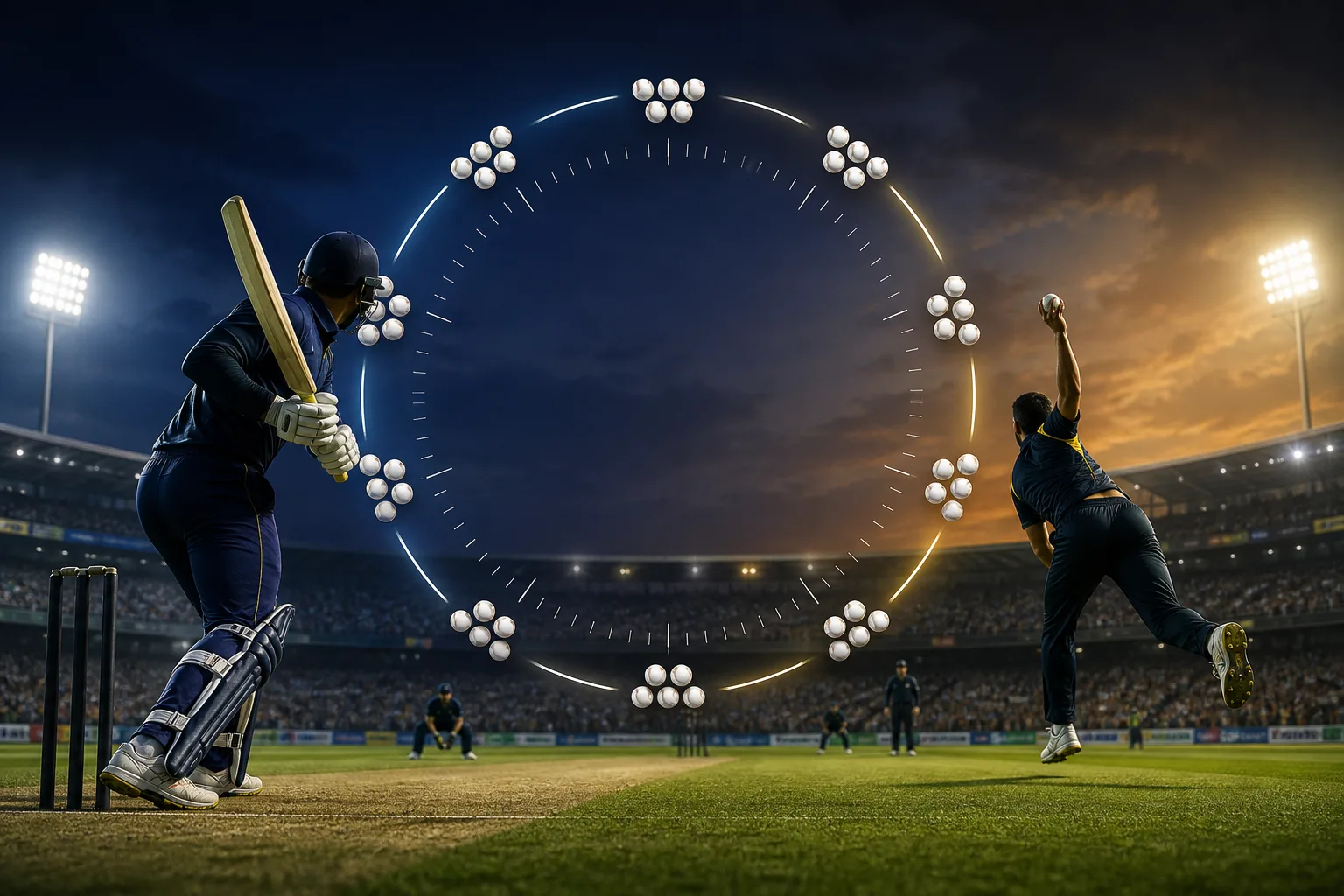
Current men’s ODI rules add an important detail. Two new white balls alternate from opposite ends through over 34, so each has bowled 17 overs. The fielding side then selects one for overs 35 to 50. The ICC introduced that final single-ball phase in July 2025 to allow more late-innings wear and the possibility of reverse swing. The complete ODI overs guide explains the timing and powerplays.
Pink cricket ball
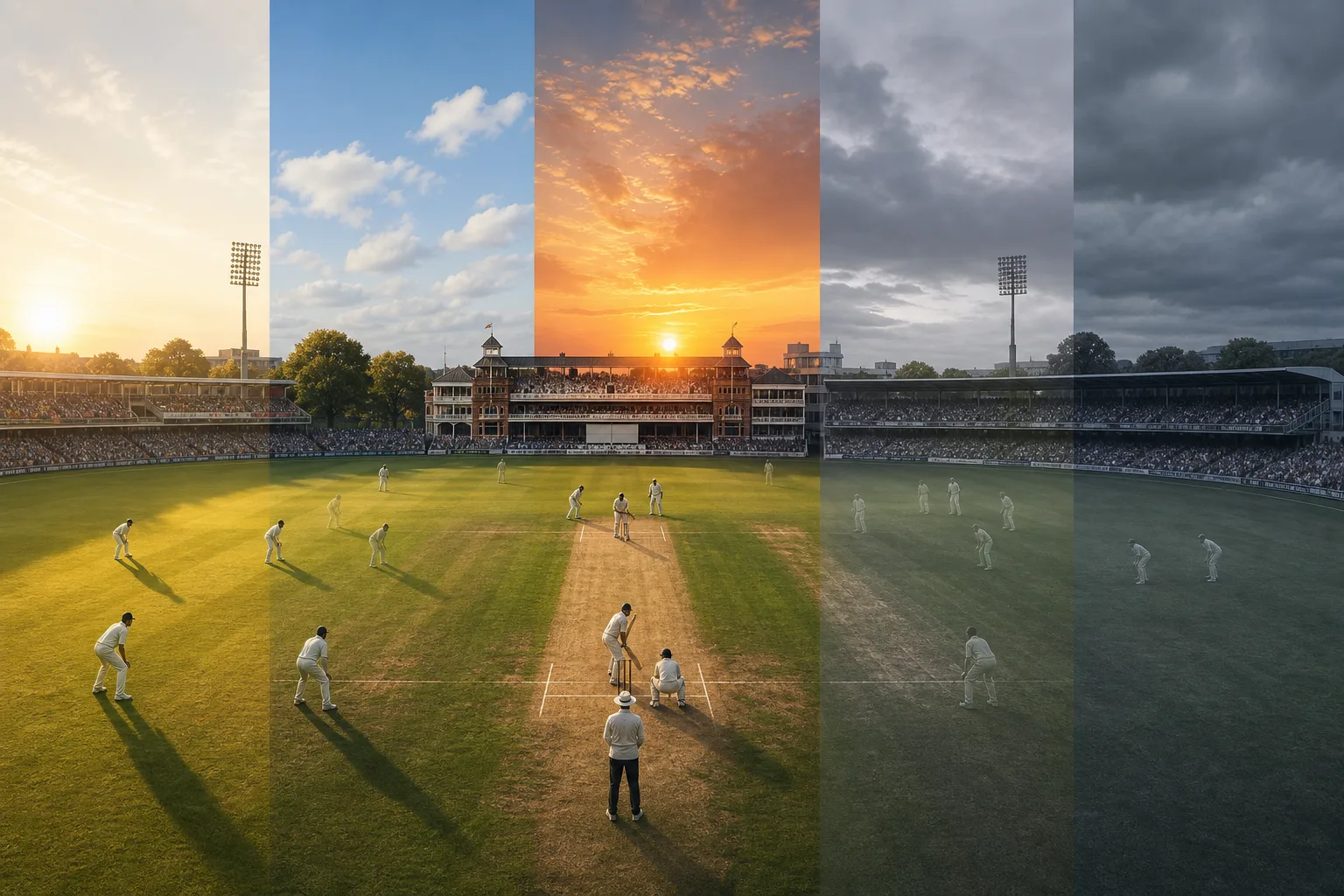
The pink ball was developed for the five-day Test format and first-class matches that start in daylight and finish under floodlights. Red becomes hard to see at night, while white can disappear against the players’ white clothing. Bright pink supplies contrast in both conditions. Australia’s 2026-27 schedule includes a practical example: the 150th Anniversary Test against England at the MCG is a day-night match.
Pink balls usually carry a strong lacquered finish and a contrasting seam. Players sometimes report pronounced movement around dusk or under lights, but visibility, atmospheric conditions and the fresh lacquer all change at the same time. It is safer to assess the particular match than claim that pink always swings most.
Day-night Test cricket has used pink since the first such Test in 2015. In 2026 the ICC also approved trials allowing teams, by prior agreement, to switch to pink in an otherwise conventional Test when bad light is expected. Traditional daytime Tests still use red as the standard.
Red versus white versus pink cricket balls
Colour is the most visible difference, not the only possible one. Dye, wax, paint, lacquer, stitching and seam construction may vary between models.
| Feature | Red | White | Pink |
|---|---|---|---|
| Main format | Day Tests, first-class | ODI, T20 | Day-night Tests |
| Designed for | Daylight | Floodlights and coloured kits | Changing day-to-night light |
| Player clothing | White | Coloured | White |
| Typical surface | Dyed/waxed and lacquered | Bright polished coating | Bright lacquered coating |
| Long innings use | One ball, new one available after 80 overs | Format-specific replacement rules | Similar long-format use |
| Universal swing ranking | None proven | None proven | None proven |
The last row corrects a common shortcut. BBC Sport reported that players perceive differences but manufacturers do not present colour alone as a performance hierarchy. One batch in humid conditions can behave differently from another on a dry abrasive pitch.
What is a cricket ball made of?
A professional ball has a cork-based centre wrapped tightly with yarn or string. Leather sections form the outer shell and are stitched together around the middle. The central rows of stitching create the raised seam that fast bowlers use for grip and movement.
The colour comes from the treatment of the cover, not a different internal game. Red, white and pink balls share the same basic structure. Their surface processes can differ to retain a usable colour during the intended match conditions.
Players may legally polish the ball without an artificial substance, subject to Law 41. Changing its condition by scratching, picking the seam or applying an unauthorized product is ball tampering. The umpires inspect the ball throughout an international match.
Official cricket ball size and weight
MCC Law 4 defines different ranges because the same senior men’s ball is not required for every competition.
| Competition | Weight | Circumference |
|---|---|---|
| Men’s cricket | 5.5 to 5.75 oz (155.9 to 163 g) | 8.81 to 9 in (22.4 to 22.9 cm) |
| Women’s cricket | 4.94 to 5.31 oz (140 to 151 g) | 8.25 to 8.88 in (21.0 to 22.5 cm) |
| Under-13 cricket | 4.69 to 5.06 oz (133 to 144 g) | 8.06 to 8.69 in (20.5 to 22.0 cm) |
National boards may set suitable sizes for younger age groups. Match organizers also approve the brand and model before play, so teams cannot substitute a personally preferred ball.
Are Dukes, Kookaburra and SG ball types?
No. Dukes, Kookaburra and SG are manufacturers. All can produce lawful leather balls, but their construction and finishing methods are not identical. Players notice differences in seam prominence, hardness, shine and the rate at which a surface wears.
Competition rules decide which approved brand is used. Changing the manufacturer can affect tactics even when colour and dimensions stay the same, which is why “red ball” alone does not fully describe how a Test ball will behave.
Practice and recreational cricket balls
Leather match balls are hard and can cause injury, so beginner practice often starts with softer equipment.
- Tennis balls suit gardens, streets and casual games. Tape can reduce grip and change bounce, but a taped tennis ball is not approved for professional cricket.
- Rubber and synthetic balls withstand repeated net sessions and rough surfaces.
- Soft safety balls help children learn catching and batting with less fear of impact.
- Weighted balls and small reaction balls serve specific drills and require supervised use.
- Swing-training balls use contrasting surfaces or shaped seams to teach wrist and seam position.
Choose the ball for the surface, player age, protective equipment and purpose. A leather ball requires a proper pitch, enough space and cricket safety gear. The cricket gear hub covers the equipment used around it, while the guide to 11-player cricket teams explains who fields and bowls with it.
Frequently asked questions
How many types of balls are used in cricket?+
Professional cricket uses three main colours of leather match ball: red, white and pink. A different classification adds tennis, rubber, synthetic and practice balls used outside elite matches. These categories should not be mixed with types of bowling delivery.
Which ball is used in Test cricket?+
Daytime Tests normally use a red leather ball. Day-night Tests use a pink ball because it remains easier to see as play moves from daylight into floodlights. Both are built to the dimensions in MCC Law 4.
Which ball is used in ODI and T20 cricket?+
ODIs and T20s use a white leather ball with coloured clothing. White offers better contrast than red under floodlights and against dark sight screens. Current men's ODI rules use two new balls through over 34, then one selected ball for the final 16 overs.
Which cricket ball swings the most?+
There is no universal answer based on colour alone. Players often report differences, but swing also depends on seam, finish, age, weather, bowler skill and manufacturer. BBC Sport found no conclusive evidence for one colour always swinging more.
What is inside a leather cricket ball?+
A quality match ball has a cork-based core wrapped tightly in yarn or string, with a leather cover stitched around it to form the raised seam. Surface dye and lacquer create the colour and finish.
Are Dukes, Kookaburra and SG different types of cricket ball?+
They are manufacturers rather than separate categories. Each makes balls within the relevant laws and competition standards, but seam construction, finish and ageing can differ enough for players to notice.
Sources
Related gear & equipment guides
View all →
Cricket Abbreviations and Full Forms: The Complete List
Every cricket abbreviation and its full form: ODI, LBW, DRS, DLS, NRR, SR, ER, TBC, TBD, RSA, DNB, c&b, st and more, grouped by where you see them.
ODI Full Form in Cricket: Meaning, 50 Overs and Rules
ODI means One Day International. Learn its 50-over format, 300 balls, bowler limits, powerplays, DLS rain rules and 60-over history.
What Is a Test Match in Cricket? The 5-Day Format
A Test match is cricket's five-day format: two innings a side, no over limit, a draw if nobody wins. The rules, Test status and the WTC explained.
English Willow vs Kashmir Willow Cricket Bats: what changes?
A practical, source-led comparison of English willow and Kashmir willow cricket bats, including fit, care and rule checks.
Cricket Ball Colours: Red, White and Pink Explained
Red, white and pink balls are used in different match conditions. The choice affects visibility and durability, while the competition’s playing conditions decide which ball is supplied.

Cricket Bat Size Guide: Junior Sizes, Adult Length and Law Limits
Use a cricket bat size chart by player height, then check pickup and the Laws of Cricket. Learn the difference between junior sizing, adult short-handle bats and legal dimensions.