What Is Retired Out in Cricket? Law 25 Explained
On this page9
- 01What does retired out mean in cricket?
- 02How does MCC Law 25.4 work?
- 03Retired out versus retired hurt
- 04Can a retired-out batter come back?
- 05Does retired out count as a wicket?
- 06Why do teams retire a batter out?
- 07Examples of retired out in T20 cricket
- 08Retired out is not timed out
- 09How to read it on a scorecard
Retired out means a batter has left the innings for a reason other than illness, injury, or another unavoidable cause and has not returned. The scorecard records the batter as out even though no bowler or fielder caused the dismissal. Under MCC Law 25.4, a return is possible only with the opposing captain’s consent.
What does retired out mean in cricket?
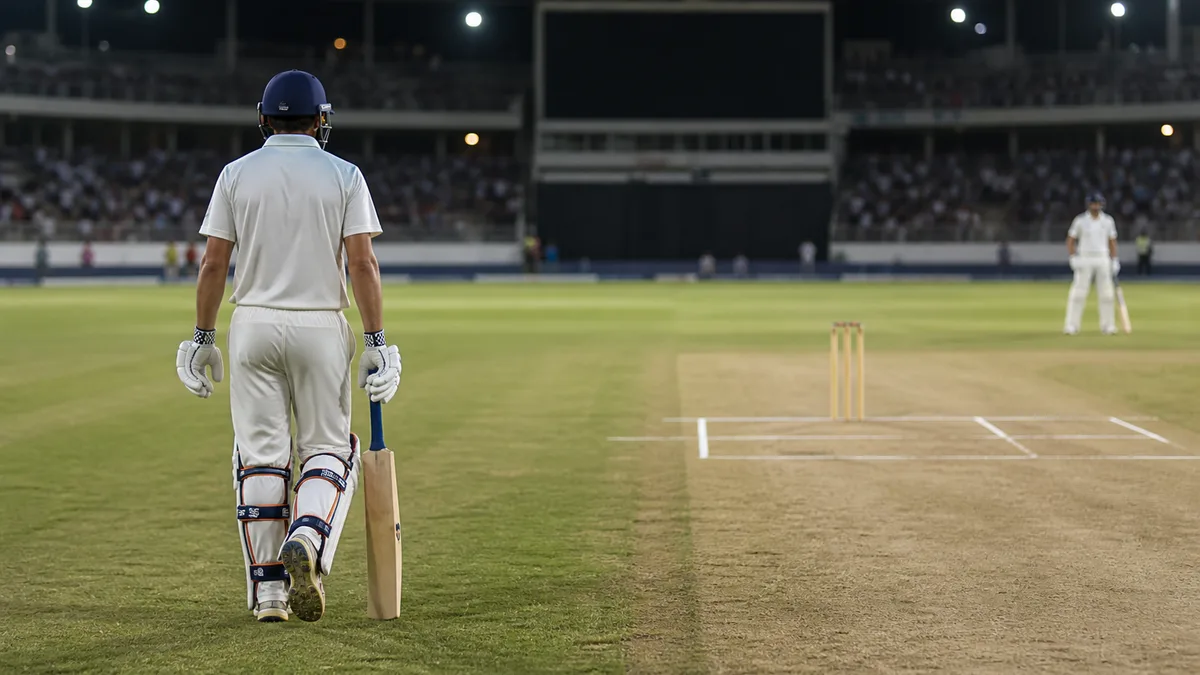
A retired-out batter has ended their innings by leaving voluntarily rather than being dismissed by the fielding side. It is usually a tactical decision in short-form cricket: a batter who is struggling to score quickly makes way for a teammate better suited to the remaining overs.
The phrase describes the scorecard result, not necessarily the instant the player walks off. A batter may retire while the ball is dead. What happens next depends on the reason for leaving and whether the innings is later resumed.
How does MCC Law 25.4 work?
Law 25.4 sets out a short sequence that matters more than the informal phrases commentators use.
- The batter may retire only when the ball is dead.
- The umpires must be told why the batter is leaving before play continues.
- If illness, injury, or another unavoidable cause forced the retirement, the batter is entitled to resume the innings.
- If the batter left for another reason, a return requires the opposing captain’s consent.
- A returning batter may come back only after a wicket falls or another batter retires.
- If a voluntary retirement is not resumed, the scorecard records “retired out.”
That distinction between a right to return and permission to return is easy to miss. An injured batter has a right under the Law. A tactically retired batter must ask the opposing captain.
Retired out versus retired hurt
The reason for leaving determines the result. “Retired hurt” is the familiar broadcast term, but MCC’s formal scorecard wording for a batter who leaves through illness, injury, or another unavoidable cause and does not return is “retired, not out.”
| Question | Retired out | Retired hurt or retired not out |
|---|---|---|
| Why did the batter leave? | A tactical or other avoidable reason | Illness, injury, or another unavoidable cause |
| Is the batter out? | Yes, if the innings is not resumed | No |
| Can the batter return? | Only with the opposing captain’s consent | Yes, as a right under Law 25.4.2 |
| When can the batter return? | After a wicket or another retirement | After a wicket or another retirement |
| Does it count in the batting average? | As an out | As a not-out innings |
| Does a bowler receive the wicket? | No | No wicket has fallen |
An umpire does not simply choose between the two labels. The reason reported when the batter leaves determines which part of Law 25.4 applies.
Can a retired-out batter come back?
Yes, but only if the opposing captain agrees. This makes retired out different from most dismissals: the batter has no automatic right to return, yet the Law leaves a narrow route back into the same innings.
Consent alone is not enough to send the batter straight back. Law 25.4.4 says the innings may resume only at the fall of a wicket or when another batter retires. If the opposing captain refuses, or no suitable opening occurs before the innings ends, the retirement remains recorded as out.
Does retired out count as a wicket?
The batting side loses a wicket, but no bowler receives credit. Suppose a team is 145 for 4 when a batter retires tactically. The incoming player takes the score to 145 for 5 because the retired-out batter’s innings has ended.
The batter keeps every run already scored. However, the innings counts as an out when the career batting average is calculated. This differs from retiring through injury and not returning, which is recorded as not out.
Retired out is sometimes included in lists of dismissal outcomes, but it is not one of the fielding side’s standard methods of dismissal. Our guide to the ways a batter can be out in cricket explains where it sits beside bowled, caught, LBW, run out, and the rarer Laws.
Why do teams retire a batter out?
Teams use the tactic to change the matchup or scoring rate without asking the current batter to sacrifice a delivery. It is most useful late in a T20 innings, where a few balls can decide the result.
Common reasons include:
- bringing in a stronger boundary hitter for the final overs;
- replacing a batter whose scoring rate has stalled;
- changing a right-hand and left-hand matchup against a particular bowler;
- giving a specialist batter access to the small number of balls left.
The choice has a cost. The retired batter normally cannot return, and the new player still has to adjust immediately. BBC Sport reported a rise in tactical retirements across men’s and women’s franchise competitions in early 2026, while also noting that the incoming batter does not always improve the outcome.
Examples of retired out in T20 cricket
Ravichandran Ashwin supplied the best-known early IPL example. Rajasthan Royals retired him during a 2022 match against Lucknow Super Giants so Riyan Parag could bat near the end of the innings. Cricket Australia reported that Ashwin and the team management had discussed the option, and Rajasthan won the match by three runs.
Mumbai Indians used the tactic with Tilak Varma against Lucknow Super Giants in April 2025. Head coach Mahela Jayawardena described it afterward as a tactical decision in an official IPL interview. The example also shows why the scorecard term matters: being asked to leave for tactical reasons is retired out, even when the choice comes from the team rather than the batter alone.
Tactical retirements are now part of T20 decision-making, but they remain much less common than ordinary wickets. Readers following IPL scorecards will also encounter terms collected in our cricket abbreviations guide and tie-break situations covered in the Super Over explainer.
Retired out is not timed out
Retired out begins with a batter who has already started an innings and then leaves while the ball is dead. Timed out applies when the next batter fails to be ready within the permitted time after a wicket or retirement.
The two outcomes can appear close together in the rulebook and both are unusual, but the sequence is different. Retired out concerns leaving an active innings. Timed out concerns failing to start one on time. Neither should be confused with a player announcing retirement from a format or from professional cricket.
How to read it on a scorecard
Look for the words “retired out” beside the batter’s name and a wicket added to the team total. The batter’s runs and balls faced remain in the scorecard, but there will be no bowler, catcher, or fielder attached to the dismissal.
If the scorecard says “retired not out,” the batter left because of illness, injury, or another unavoidable cause and did not resume. Match reports often call that retired hurt. In both cases, checking the notation is more reliable than guessing why the player walked toward the pavilion.
For more match terminology, start with ICC and other common cricket full forms or see how a tied limited-overs match proceeds to a Super Over.
Frequently asked questions
Does retired out count against a batter's average?+
Yes. A retired-out innings is treated as an out when the batting average is calculated. The runs still count, but the innings does not receive the protection of a not-out. No bowler or fielder receives credit because the opposition did not cause the dismissal.
Can a team retire more than one batter in an innings?+
MCC Law 25 does not set a one-batter limit. A team could use more than one tactical retirement, provided each batter leaves while the ball is dead and the umpires are informed. Tournament playing conditions may add restrictions, so the rules for that competition still need checking.
Can a retired-out batter bowl or field later?+
Retired out ends the batter's innings, not the player's participation in the match. The player may still field or bowl later, subject to the normal playing conditions, injury rules, and any penalty time that applies after an absence from the field.
Is retired out the same as retiring from cricket?+
No. Retired out describes what happened to one batting innings in one match. Retirement from cricket means a player has ended a career or stopped playing a format. The similar wording does not connect the two decisions under the Laws.
Can a batter retire out on zero?+
Yes. Law 25.4 does not require the batter to score or face a minimum number of balls. A batter can leave on zero once the ball is dead. If the innings is not resumed under the Law, the scorecard records the batter as retired out.
Does a bowler get a wicket when a batter retires out?+
No. The team has lost a wicket for scorecard purposes, but the dismissal is not credited to a bowler. That is one reason a team's wickets lost and the sum of wickets credited to its opponents' bowlers can differ.
Sources
Related rules & terms guides
View all →
What Is an Innings in Cricket? Meaning and Rules
An innings is one team's turn to bat, or one batter's time at the crease. Learn how innings work in Tests, ODIs and T20s and the five ways they end.

How Many Ways Can You Be Out in Cricket? All 10
All 10 ways a batter can be out under the MCC Laws, with Law numbers, how often each happens, and which dismissals actually credit the bowler.
What Is the Follow-On in Test Cricket? Law 14 Explained
The follow-on lets a captain make the trailing side bat again. Here are the 200-run rule, the margins for shorter matches, and when enforcing it backfired.
Run-Out Rules in Cricket: When Is the Batter Out?
A run out occurs when a batter is out of their ground and the wicket at that end is fairly put down while the ball is in play, subject to the relevant Law and exceptions.

Cricket Fielding Positions Explained: A Simple Field Setup Guide
Learn every main cricket fielding position, where it sits relative to the batter and when captains use slips, point, cover, midwicket and the boundary riders.
Can a Wicketkeeper Bowl in Cricket? The Rule Explained
Yes, a wicketkeeper can bowl in cricket. See how teams switch keepers, when substitutes cannot bowl, and what happens to the gloves and pads.