How Many Creases Are There in Cricket? All Lines Explained
On this page9
- 01How many creases are on a cricket pitch?
- 02Where are the crease lines placed?
- 03What is the bowling crease?
- 04What is the popping crease?
- 05What are the return creases?
- 06Which part of the white line counts?
- 07What does “inside the crease” mean for a batter?
- 08Which crease does the bowler use?
- 09Common crease-count mistakes
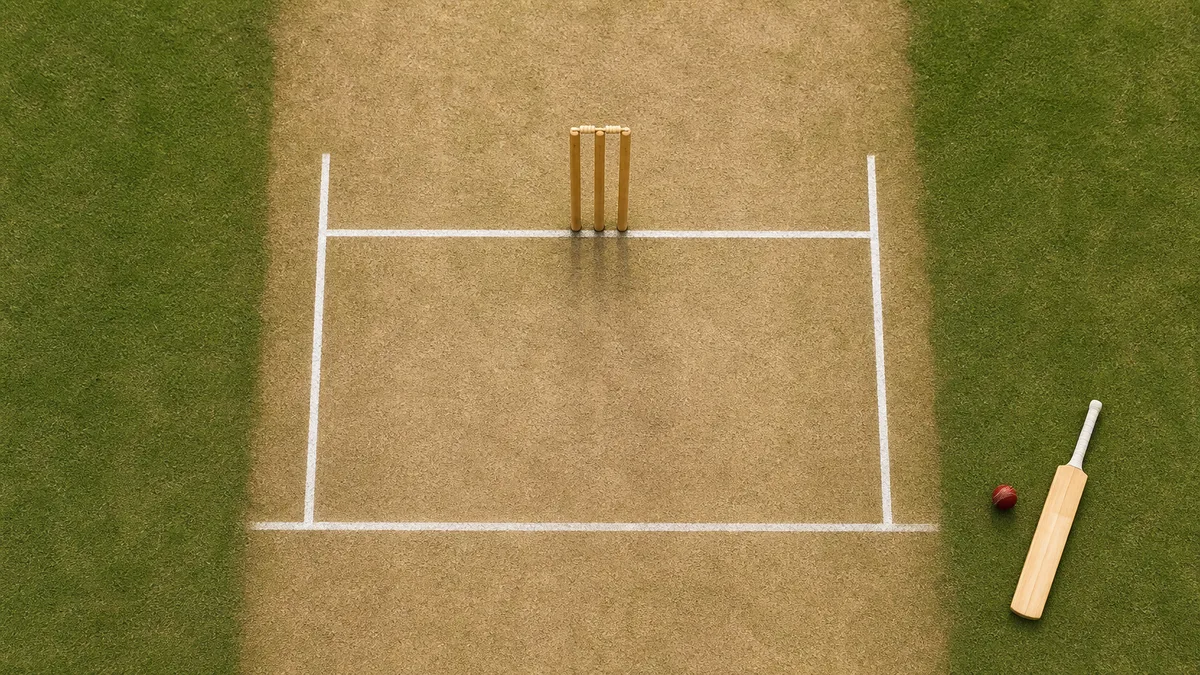
There are four creases at each end of a cricket pitch: one bowling crease, one popping crease, and two return creases. Count both ends and the pitch has eight crease positions. Count the different kinds and there are three types. That is why otherwise reliable explanations sometimes give different numbers.
How many creases are on a cricket pitch?
The complete pitch has eight: four around the wicket at one end and the same four around the wicket at the other. MCC Law 7 requires each set to be marked in white.
| Crease type | At one end | Across both ends | Main use |
|---|---|---|---|
| Bowling crease | 1 | 2 | Marks the end of the pitch and runs through the stumps |
| Popping crease | 1 | 2 | Defines the front edge of a batter’s ground and the bowler’s front-foot limit |
| Return crease | 2 | 4 | Limits the bowler’s back-foot position and approach angle |
| Total | 4 | 8 | Three different types |
If a quiz asks “How many creases are there in cricket?”, four is usually the expected answer because it refers to one end. Eight is correct when the question explicitly asks about the entire pitch.
Where are the crease lines placed?
The bowling crease passes through the three stumps. The popping crease runs parallel to it, 4 feet or 1.22 metres toward the center of the pitch. Two return creases run at right angles, one on each side.
| Measurement | Imperial | Metric |
|---|---|---|
| Bowling crease length | 8 ft 8 in | 2.64 m |
| Bowling to popping crease | 4 ft | 1.22 m |
| Center line to each return crease | 4 ft 4 in | 1.32 m |
| Minimum popping-crease marking on each side of center | 6 ft | 1.83 m |
| Minimum return-crease marking behind popping crease | 8 ft | 2.44 m |
The physical white markings have minimum lengths, but Law 7 treats the popping and return creases as continuing beyond the painted ends. A player cannot escape a decision merely because a foot lands just past the visible paint.
What is the bowling crease?
The bowling crease is the 8-foot-8-inch line through the centers of the three stumps. It marks the end of the pitch and anchors the positions of the other three creases.
Despite the name, the bowling crease is not the front-foot line used for an overstep. That job belongs to the popping crease in front of it. The bowling crease tells grounds staff where the wicket sits and fixes the 22-yard distance between the two ends.
MCC defines the legal crease as the back edge of the white marking, which is the edge nearer the stumps at that end. The stumps are centered on the line.
What is the popping crease?
The popping crease is the line 4 feet in front of and parallel to the bowling crease. It serves both batters and bowlers, which is why it appears in run-out, stumping, and front-foot no-ball decisions.
For a batter, the whole area behind the popping crease at that end is the ground. A bat or part of the body must be grounded behind the legal edge to establish safety. Merely hovering above the line does not always protect the batter, because the relevant dismissal Laws also govern a batter who has left the ground.
For a bowler, some part of the front foot must land behind the popping crease during the delivery stride. The foot may land on the white marking if part of it remains behind the legal edge. A complete overstep is a no-ball.
The common phrase “batting crease” usually means this popping crease. It is not a fourth type listed in Law 7.
What are the return creases?
The two return creases run at right angles to the popping and bowling creases. Each sits 4 feet 4 inches from the imaginary center line joining the middle stumps, so together they create the side limits of the bowler’s delivery area.
The bowler’s back foot must land within and not touch the return crease associated with the stated mode of delivery. A right-arm bowler going over the wicket and the same bowler going around the wicket use opposite sides of the wicket, but the legal back-foot test remains the same.
The return crease is defined by the inside edge of its marking. Touching that legal edge with the back foot produces a no-ball under standard playing conditions.
Which part of the white line counts?
The crease is a specified edge of the painted marking, not the entire strip of white paint. This detail decides close foot-fault and run-out calls.
- The bowling crease is the back edge of its marking.
- The popping crease is the back edge of its marking.
- Each return crease is the inside edge of its marking.
For the popping crease, “back” means the side nearer the wicket at that end. For a return crease, “inside” means the side nearer the pitch’s center line. Television replays enlarge these edges because a few millimetres can separate a legal delivery from a no-ball.
What does “inside the crease” mean for a batter?
A batter is safe when some part of the person or bat is grounded in the ground behind the popping crease, subject to the detailed dismissal Laws. The bat does not need to be flat. A grounded toe of the bat beyond the legal edge can be enough.
The white line itself belongs in front of the legal back edge. A bat resting only on the paint without reaching behind that edge may therefore be short of the ground. This is why commentators talk about getting the bat “over the line,” even though the true legal test concerns the specified edge.
The distinction matters most for run out and stumped among cricket’s dismissal types. Crease position also affects whether impact occurred in line during an LBW decision. A batter may take guard outside the crease but must accept the extra stumping risk.
Which crease does the bowler use?
The bowler uses the popping crease for the front foot and a return crease for the back foot. Both must satisfy the foot-placement rule on the same delivery.
| Bowler’s foot | Relevant crease | Legal requirement |
|---|---|---|
| Front foot | Popping crease | Some part lands behind the legal edge |
| Back foot | Return crease | Lands within and does not touch the legal inside edge |
A legal front foot does not rescue an illegal back foot, and the reverse is also true. Either fault can cause the umpire to call no-ball. The rule applies whether the match is a five-day Test or the 50-over format explained in our ODI guide.
Common crease-count mistakes
The most common mistake is adding “batting crease” as a separate line. It is another name people use for the popping crease. The second is counting two return creases as one type and then reporting only three creases at each end. There are three types but four individual creases.
Another mistake is counting only the striker’s end. Both ends have identical markings because the batters change ends while running and a new over is bowled from the opposite end. The Test match guide explains how innings and overs use the same 22-yard pitch throughout play.
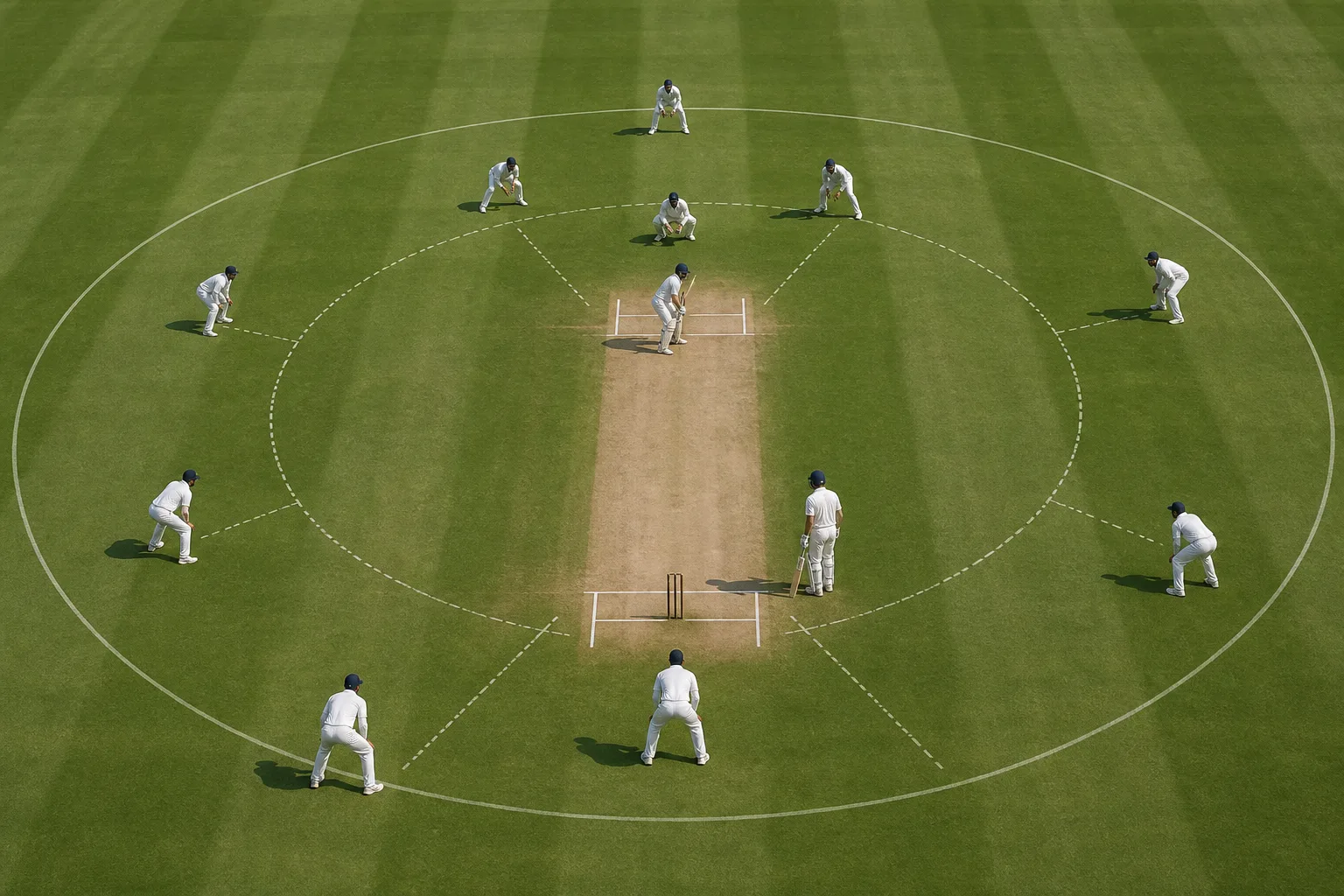
Cricket’s field positions can look crowded, but the basic setup is fixed: 11 players per team, two wickets, and four crease lines around each wicket.
Frequently asked questions
What is the distance between the two popping creases?+
The two popping creases are 58 feet, or 17.68 metres, apart. Each sits 4 feet in front of its bowling crease, while the two bowling creases mark the ends of the 66-foot, or 20.12-metre, pitch.
Is the batting crease the same as the popping crease?+
“Batting crease” is an informal name commonly used for the popping crease because it defines the front of a batter's ground. MCC Law 7 names it the popping crease. There is no separate line called the batting crease in the standard Laws.
Can a batter stand outside the crease before the ball is bowled?+
Yes. A batter may take guard in front of the popping crease, but doing so reduces the time available to regain the ground. If the wicket is fairly put down while the batter is outside the ground, a run-out or stumping may follow under the relevant Law.
Are the crease lines part of the crease?+
The whole painted stripe is not the legal crease. MCC Law 7 defines the bowling and popping creases by the back edge of each marking and the return creases by their inside edges. Foot position is judged against those specified edges.
Why are there two return creases at each end?+
They form the side limits for a bowler approaching from either side of the wicket. During the delivery stride, the back foot must land within and not touch the return crease associated with the declared mode of delivery.
How wide is a cricket pitch between the return creases?+
The two return creases are each 4 feet 4 inches from the imaginary center line through the middle stumps. The distance between their legal inside edges is therefore 8 feet 8 inches, or 2.64 metres, matching the length of the bowling crease.
Sources
Related rules & terms guides
View all →
How Many Wickets Are There in Cricket? Team, Innings and Pitch Explained
Cricket has two physical wickets, 10 dismissals to end a normal innings and 11 players in a side. Here is how each meaning fits together.
ODI Full Form in Cricket: Meaning, 50 Overs and Rules
ODI means One Day International. Learn its 50-over format, 300 balls, bowler limits, powerplays, DLS rain rules and 60-over history.
How Many Players in a Cricket Team? 11 on the Field
A cricket team has 11 players on the field. Here is the full squad, the 12th man, what substitutes may do, concussion subs and the IPL Impact Player rule.
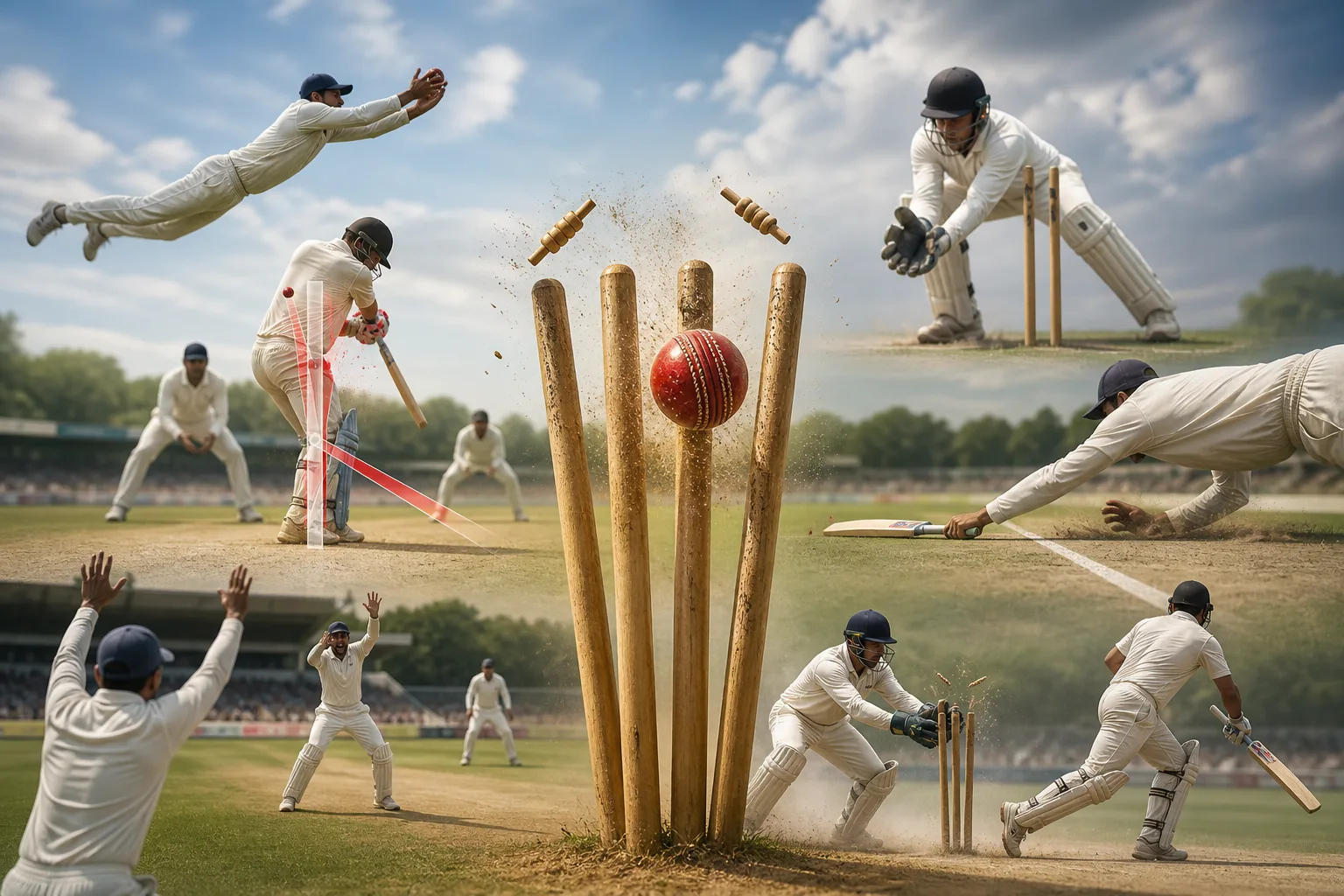
How Many Ways Can You Be Out in Cricket? All 10
All 10 ways a batter can be out under the MCC Laws, with Law numbers, how often each happens, and which dismissals actually credit the bowler.
Cricket Ball Hits Batter Rules: what happens next?
When a delivered ball hits a batter, the result depends on whether the ball is dead, whether runs are attempted, whether it is a leg bye, and whether a dismissal or penalty applies. There is no single automatic outcome for every body contact.
Cricket Non-Striker Run-Out Rules: what Law 38 says
A non-striker can be run out when out of their ground and the wicket is fairly put down while the ball is in play, subject to the current wording and the withdrawal provisions in MCC Law 38. It is a run-out dismissal, not a separate informal rule.