Cricket World Cup Winners by Year: 1975 to 2023
On this page13
- 01How we compiled the Cricket World Cup winners
- 02Current ODI World Cup record through 2023
- 03Cricket World Cup winners and runners-up by year
- 04World Cup titles by country
- 051975 and 1979: West Indies sets the standard
- 061983: India overturns West Indies
- 071987 to 1996: three first-time champions
- 081999 to 2007: Australia’s three-title streak
- 092011: India wins at home
- 102015: Australia beats New Zealand
- 112019: a tie decided by boundary count
- 122023: Australia wins a sixth title
- 13How the World Cup has changed
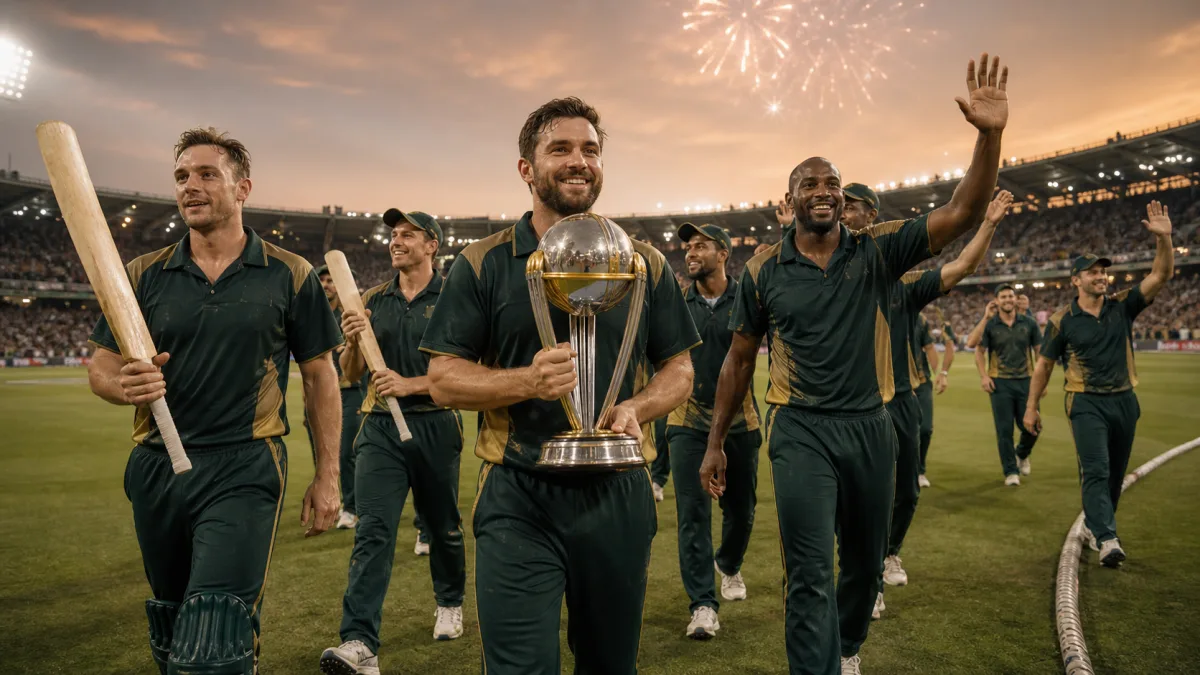
Australia has won six of the 13 men’s ODI Cricket World Cups, including the most recent in 2023. India and West Indies have won twice each. Pakistan, Sri Lanka and England complete the list with one title apiece. The captains behind these titles are compared in our greatest cricket captains shortlist, which separates trophy totals from Test longevity and era context. For the difference between a cultural label and an official designation, see is cricket a national sport?.
How we compiled the Cricket World Cup winners
The table covers every completed men’s ODI Cricket World Cup from 1975 through 2023. We verify the champion, runner-up, host, venue and final result for each edition and keep the tournament’s historical team names where they matter.
The men’s T20 World Cup, Women’s Cricket World Cup and qualifying tournaments are separate competitions and are excluded. Future editions do not enter the list until the final is complete, so the 2027 Cricket World Cup is tracked as an upcoming event rather than projected as a result.
Current ODI World Cup record through 2023
Australia’s 2023 victory is the latest completed men’s ODI World Cup result. The next edition will be added after its final, not while the tournament is scheduled or in progress.
Cricket World Cup winners and runners-up by year
The table covers the men’s 50-over World Cup. The first three editions used 60 overs per side; the tournament switched to 50 in 1987.
| Year | Winner | Runner-up | Final result | Host / final venue | Winning captain |
|---|---|---|---|---|---|
| 1975 | West Indies | Australia | Won by 17 runs | England / Lord’s | Clive Lloyd |
| 1979 | West Indies | England | Won by 92 runs | England / Lord’s | Clive Lloyd |
| 1983 | India | West Indies | Won by 43 runs | England / Lord’s | Kapil Dev |
| 1987 | Australia | England | Won by 7 runs | India and Pakistan / Kolkata | Allan Border |
| 1992 | Pakistan | England | Won by 22 runs | Australia and New Zealand / Melbourne | Imran Khan |
| 1996 | Sri Lanka | Australia | Won by 7 wickets | Pakistan / Lahore | Arjuna Ranatunga |
| 1999 | Australia | Pakistan | Won by 8 wickets | England / Lord’s | Steve Waugh |
| 2003 | Australia | India | Won by 125 runs | South Africa / Johannesburg | Ricky Ponting |
| 2007 | Australia | Sri Lanka | Won by 53 runs (D/L) | West Indies / Bridgetown | Ricky Ponting |
| 2011 | India | Sri Lanka | Won by 6 wickets | India / Mumbai | MS Dhoni |
| 2015 | Australia | New Zealand | Won by 7 wickets | Australia / Melbourne | Michael Clarke |
| 2019 | England | New Zealand | Match and Super Over tied; boundary count | England / Lord’s | Eoin Morgan |
| 2023 | Australia | India | Won by 6 wickets | India / Ahmedabad | Pat Cummins |
England’s 2019 entry needs the full wording. The final was not won by runs or wickets; both the 50-over match and Super Over were tied before the tournament’s boundary-count tiebreaker separated the teams.
World Cup titles by country
Six countries have won the men’s ODI World Cup. Australia owns almost half of all titles and is the only team to win three consecutive editions.
| Team | Titles | Winning years | Finals |
|---|---|---|---|
| Australia | 6 | 1987, 1999, 2003, 2007, 2015, 2023 | 8 |
| India | 2 | 1983, 2011 | 4 |
| West Indies | 2 | 1975, 1979 | 3 |
| Pakistan | 1 | 1992 | 2 |
| Sri Lanka | 1 | 1996 | 3 |
| England | 1 | 2019 | 4 |
| New Zealand | 0 | — | 2 |
South Africa has reached several semi-finals but no final. New Zealand is the only team to lose consecutive finals, in 2015 and 2019, without ever lifting the trophy.
1975 and 1979: West Indies sets the standard
West Indies won the first World Cup at Lord’s in 1975. Captain Clive Lloyd changed the final with 102 from 85 balls, lifting his side to 291 for 8. Australia was dismissed for 274 despite a late chase shaped by five run-outs.
Earlier in that tournament, West Indies beat Pakistan by one wicket at Edgbaston in the teams’ first ODI. The Pakistan vs West Indies record places that finish beside their current 140-match ODI history rather than presenting it as a final.
Four years later, Viv Richards made an unbeaten 138 against England. West Indies scored 286 for 9, then Joel Garner took five wickets as England collapsed from 183 for 2 to 194 all out. The 92-run win completed the tournament’s first successful title defence.
1983: India overturns West Indies
India entered the 1983 final against a West Indies side chasing a third straight crown. It was dismissed for only 183 at Lord’s, a total that looked inadequate even on a difficult pitch.
India’s bowlers and fielders made it defendable. Kapil Dev’s running catch removed Viv Richards, and West Indies fell for 140. The 43-run upset transformed cricket’s commercial and cultural position in India.
1987 to 1996: three first-time champions
The 1987 tournament moved beyond England for the first time and reduced innings from 60 overs to 50. Australia beat England by seven runs in Kolkata, the narrowest run-margin in a men’s World Cup final.
Pakistan won in 1992 after recovering from a poor start to the tournament. It first beat New Zealand by four wickets in the semi-final; the Pakistan vs New Zealand hub keeps that knockout result with their wider rivalry record. Imran Khan’s 72 and Wasim Akram’s decisive spell then carried Pakistan past England by 22 runs at the MCG.
That campaign also contained Pakistan’s first ODI against South Africa, a rain-affected 20-run defeat in Brisbane. The Pakistan vs South Africa record keeps the historical margin and their current ODI total together.
Sri Lanka completed another first in 1996. Aravinda de Silva took three wickets and made an unbeaten 107 as Sri Lanka chased Australia’s 241 with seven wickets left at Gaddafi Stadium in Lahore. It remains Sri Lanka’s only men’s ODI World Cup title.
1999 to 2007: Australia’s three-title streak
Bangladesh’s 62-run win over Pakistan at Northampton was one of the 1999 group stage’s defining upsets. The Pakistan vs Bangladesh record keeps that match within their complete ODI history and separates it from the teams’ later Test and T20I meetings.
Australia dominated three consecutive tournaments. Its 1999 final against Pakistan lasted only 59.1 overs in total: Shane Warne took 4 for 33, Pakistan was dismissed for 132, and Australia chased the target for two wickets.
Ricky Ponting then captained the 2003 and 2007 champions. His unbeaten 140 powered Australia to 359 for 2 against India in Johannesburg, setting up a 125-run win. For the separate tournament record between Pakistan and India, the permanent rivalry hub keeps ODI and T20 World Cups in distinct rows. Four years later Adam Gilchrist’s 149 drove a rain-shortened final victory over Sri Lanka.
Across those two Ponting-led campaigns, Australia did not lose a match. The streak from 1999 also made it the only country to win three World Cups in a row.
2011: India wins at home
India became the first team to win a World Cup final on home soil in 2011. Sri Lanka set 275 after Mahela Jayawardene’s unbeaten century, then removed Virender Sehwag and Sachin Tendulkar early.
Gautam Gambhir made 97 and MS Dhoni promoted himself to score an unbeaten 91. Dhoni finished the chase with a six, sealing a six-wicket win at Wankhede Stadium. India thereby added a second title 28 years after 1983.
2015: Australia beats New Zealand
The 2015 co-hosts met at the MCG. New Zealand’s unbeaten run ended abruptly when Mitchell Starc bowled Brendon McCullum in the first over, and the side was dismissed for 183.
Australia chased the target with seven wickets remaining. Michael Clarke made 74 in his final ODI, while Mitchell Starc finished the tournament as Player of the Series.
2019: a tie decided by boundary count
New Zealand made 241 for 8 at Lord’s. England also reached 241, helped by a late overthrow deflection off Ben Stokes’s bat, so the final went to a Super Over.
Both teams scored 15 in the extra over. The playing conditions then awarded the match to the team with more boundaries across the main match and Super Over: England had 26 to New Zealand’s 17. The ICC later replaced that rule with repeated Super Overs for future knockout ties.
The result remains officially a tied match with England declared champion under the tiebreaker. Calling it simply a one-run or one-boundary victory is inaccurate.
2023: Australia wins a sixth title
Afghanistan recorded its first ODI win over Pakistan during the group stage, chasing 283 in Chennai with eight wickets in hand. The Pakistan vs Afghanistan record places that result after Pakistan’s seven straight ODI wins and keeps it separate from the tournament’s title history.
India entered the Ahmedabad final unbeaten and made 240 after being sent in. Australia slipped to 47 for 3 in reply, but Travis Head and Marnus Labuschagne added 192.
Head made 137, becoming the seventh man to score a century in a men’s World Cup final. Australia reached 241 for 4 in the 43rd over to win by six wickets. Pat Cummins thereby captained the country to its sixth ODI crown.
How the World Cup has changed
The event began with eight teams, red balls, white clothing and 60-over daytime matches. It shifted to 50 overs in 1987, introduced coloured kits, white balls and floodlights in 1992, and has repeatedly changed its group format.
What has not changed is its status as the main global championship for ODI cricket. An ODI means One Day International, and the ODI full-form and rules guide explains its overs, powerplays and rain minimums.
The shorter eight-team ODI event has a separate history in our Champions Trophy winners list. For 20-over champions, use the T20 World Cup winners list. The tournament’s biggest stands are in the highest ODI World Cup partnerships. Its final grounds also feature in our evidence-based ranking of the world’s most famous cricket stadiums, while the largest cricket grounds list compares capacity only. Domestic franchise winners are tracked in the IPL winners list, and more tables live on the cricket records hub.
Frequently asked questions
Which country has won the most Cricket World Cups?+
Australia, with six men's ODI titles in 1987, 1999, 2003, 2007, 2015 and 2023. It has also lost two finals, in 1975 and 1996.
How many Cricket World Cups has India won?+
Two men's ODI World Cups: 1983 under Kapil Dev and 2011 under MS Dhoni. India was runner-up in 2003 and 2023.
Who won the 2023 Cricket World Cup?+
Australia beat India by six wickets in Ahmedabad. Travis Head made 137 as Australia chased 241 in 43 overs to win its sixth title.
How did England win the tied 2019 World Cup final?+
The match and the one-over Super Over were both tied. Under the tournament rule then in force, England won because it had scored more boundaries across the match and Super Over. The boundary-count rule was later removed.
Which teams have won back-to-back World Cups?+
West Indies won the first two editions in 1975 and 1979. Australia won three in a row in 1999, 2003 and 2007, the longest title streak.
When and where is the next Cricket World Cup?+
The next men's ODI World Cup is scheduled for 2027 in South Africa, Zimbabwe and Namibia.
Sources
Related records & stats guides
View all →
T20 World Cup Winners List 2007 to 2026: Every Champion
Complete T20 World Cup winners list from 2007 to 2026 with runners-up, hosts, final margins and players of the tournament, plus the women's champions.
ICC Champions Trophy Winners List: 1998 to 2025
Every ICC Champions Trophy winner, runner-up, captain and final result from 1998 to 2025, including the 2002 shared title and India's record.
Asia Cup Winners List: Every Champion From 1984 to 2025
Every men's Asia Cup winner, runner-up and final result from 1984 to 2025, with India, Sri Lanka and Pakistan title totals and ODI/T20 formats.
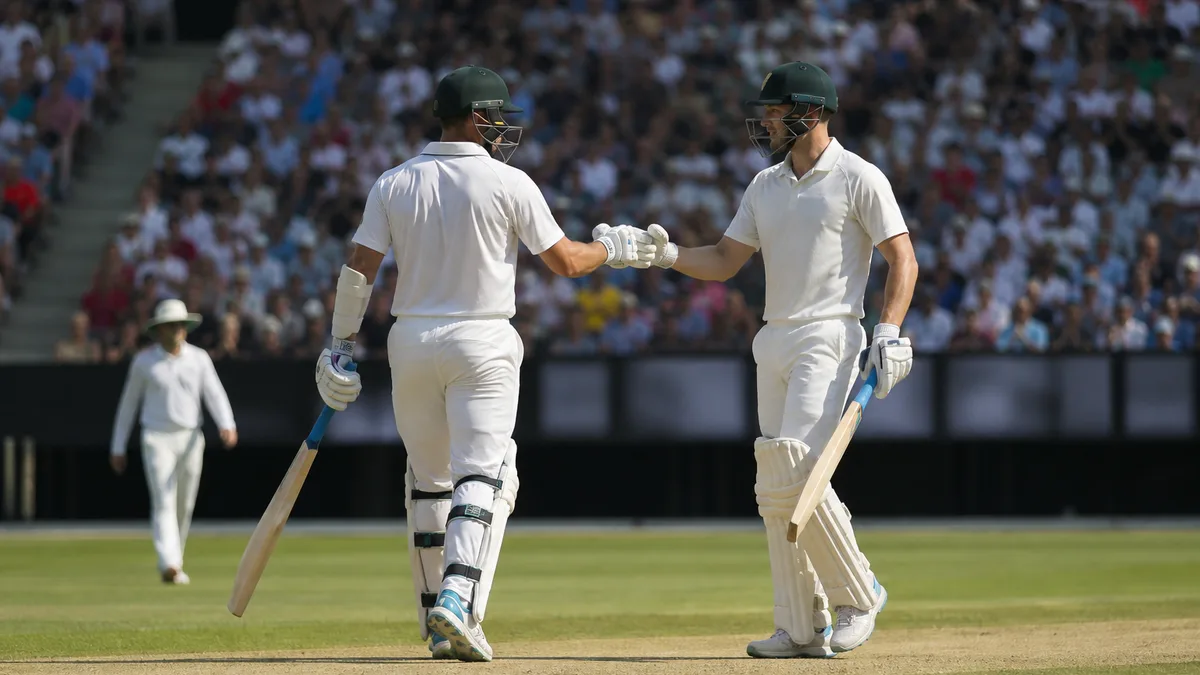
Highest ICC World Cup Partnerships: ODI and T20
Compare the 10 highest partnerships in men's ODI and T20 World Cup history, with runs, wickets, opponents, venues and match context.
What Is a Test Match in Cricket? The 5-Day Format
A Test match is cricket's five-day format: two innings a side, no over limit, a draw if nobody wins. The rules, Test status and the WTC explained.
ICC Full Form in Cricket: What It Stands For and Does
ICC full form in cricket is International Cricket Council, the global governing body based in Dubai. Here is what it runs and what it does not control.